Iran navy capabilities matter in 2026 because the threat is not a conventional fleet duel; it is a layered Persian Gulf naval risk problem built around the IRGC Navy, Iran naval mines, anti-ship missiles, fast attack boats, submarines, and the geography of the Strait of Hormuz.
This guide fills the gap between broad force comparisons and route-specific Hormuz pages. Use the Persian Gulf map to understand the basin, the Strait of Hormuz map to visualize lane compression, and this page to judge which Iranian naval tools can create pressure in those waters. The short version: Iran is weak in open-ocean naval power, but dangerous in the narrow seas where mines, small boats, missiles, drones, shore surveillance, and ambiguity can compound faster than a single ship count suggests.
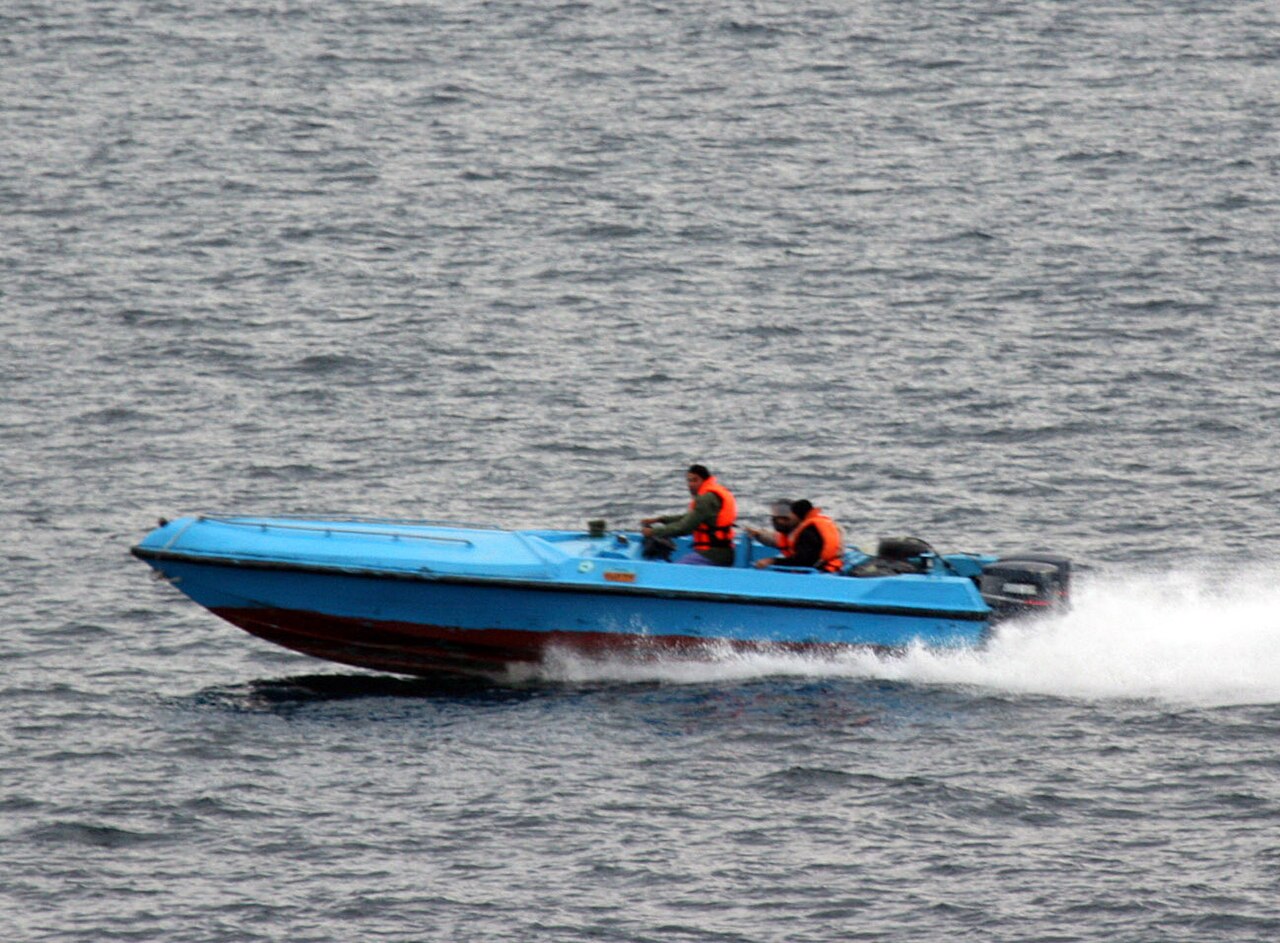
How strong are Iran navy capabilities in 2026?
Iran's navy is strong in the mission it actually designed for: making nearby waters unsafe, uncertain, and costly for a stronger opponent. It is not built to defeat the U.S. Navy in a blue-water engagement, protect long global sea lanes, or sustain carrier-style expeditionary operations. It is built to exploit local chokepoints, distribute weapons across many small platforms, and make every mine-clearing or escort mission take longer than commercial markets can tolerate.
The U.S. Defense Intelligence Agency's public Iran military power framing identified naval forces able to threaten navigation in the Persian Gulf and Strait of Hormuz as one of Iran's three core military capabilities, alongside missiles and unconventional forces. That ranking matters: it places naval disruption at the center of Iran's deterrence model, not as an afterthought. In an escalation cycle, the navy becomes a tool for signaling, retaliation, economic pressure, and coercive bargaining at the same time.
The most useful way to grade Iranian naval strength is by scenario. Against a modern carrier strike group in open water, Iran is heavily outmatched. Against isolated tankers, slow mine-countermeasure vessels, offshore energy infrastructure, or commercial operators trying to price risk in a narrow passage, Iran's asymmetric toolkit is much more consequential. That is why this page should be read alongside the Strait of Hormuz closure timeline: the question is rarely "can Iran sink every ship?" The better question is "can Iran create enough uncertainty to make normal shipping behavior stop?"
| Capability | Relative Strength | Where It Matters | Risk Signal |
|---|---|---|---|
| Fast attack boats | High locally | Persian Gulf, Hormuz approaches, tanker harassment | Large sortie clusters, night movement, radio warnings |
| Naval mines | High disruption value | Transit lanes, anchorages, mine-clearance routes | Minelayer activity, drifting objects, sudden exclusion claims |
| Submarines | Medium but useful | Gulf of Oman, Arabian Sea approaches, covert mine laying | Unusual patrols, port dispersal, ASW alerts |
| Large surface ships | Low against major navies | Patrol, presence, limited escort, symbolic reach | Dispersal from Bandar Abbas or Chabahar |
| Coastal missiles and drones | High when integrated | Shore-to-sea targeting, escort stress, port threat | Radar activation, launch-unit movement, coastal alerts |
Why ship counts understate the threat
Counting frigates, corvettes, patrol boats, and submarines can be useful, but ship counts miss the purpose of Iranian naval planning. A small boat that cannot survive a long fight against a destroyer can still force that destroyer to spend attention, ammunition, and time if it appears with dozens of other contacts in cluttered waters. A cheap mine can shape behavior even before detonation if insurers and masters believe a cleared lane is uncertain. A shore-based missile can constrain where mine hunters and escorts operate, which means the mine threat and the missile threat reinforce each other.
This is the same logic that appears in Iran's drone and missile posture. Iran does not need every drone to penetrate a defense layer to create defensive exhaustion; our Iran drone swarm tactics analysis breaks down that saturation logic in the air domain. At sea, the equivalent is a mixture of boats, mines, missiles, drones, deception, and geography that turns clean tactical superiority into a messy operational problem.
What is the difference between Iran Navy and IRGC Navy?
Iran operates two naval systems with different missions. The Islamic Republic of Iran Navy, often called IRIN, is the conventional navy under the Artesh. It handles larger surface ships, submarines, Gulf of Oman and Caspian missions, and limited out-of-area presence. The Islamic Revolutionary Guard Corps Navy, or IRGCN, is the asymmetric maritime arm responsible for much of the pressure inside the Persian Gulf and around the Strait of Hormuz.
The distinction matters because "Iran Navy" headlines often blur two forces that do not fight the same way. The IRIN is easier to compare with traditional navies because it has identifiable ships, submarines, ports, and command structures. The IRGCN is harder to reduce to a fleet list because its power comes from dispersion: small boats, fast inshore attack craft, coastal missile batteries, mines, drone boats, special operations teams, and a command culture built around surprise and local initiative.
CSIS, summarizing the DIA view of Iranian naval forces, notes the 2007 division of labor: the IRGCN took sole responsibility for the Persian Gulf, the IRIN focused on the Gulf of Oman and Caspian Sea, and both shared responsibility for the Strait of Hormuz. That split explains why a crisis in the Gulf of Oman map corridor does not look the same as a crisis inside the narrow Hormuz transit lanes. Different forces, sensors, and weapons dominate each space.
| Force | Primary Mission | Main Tools | Analytic Mistake To Avoid |
|---|---|---|---|
| IRIN | Conventional naval defense, submarines, larger patrol presence | Kilo-class submarines, smaller subs, surface combatants, logistics vessels | Assuming old ships mean no maritime threat |
| IRGCN | Persian Gulf denial, Hormuz pressure, asymmetric escalation | Fast boats, mines, anti-ship missiles, drones, special forces | Measuring it only by large vessels |
| Shared Hormuz role | Chokepoint defense and coercive signaling | Coastal sites, patrol craft, surveillance, mines, missile coverage | Treating closure as only a physical blockade |
Why IRGCN matters more inside Hormuz
The IRGCN is tailored to the littoral fight. Its platforms do not need long endurance if the operating area is close to Iranian ports, islands, coves, and coastal launch positions. Its small craft can hide among commercial traffic, fishing boats, and coastal clutter. Its mine-laying options do not require a major warship if mines can be moved by smaller vessels, submersibles, or improvised platforms. In a narrow waterway, those traits matter more than prestige tonnage.
The conventional navy still matters. Submarines can complicate anti-submarine warfare, covert surveillance, and mine-laying assumptions beyond the immediate Strait. Larger ships can signal presence or support operations away from the coast. But for immediate tanker pressure, the IRGCN is usually the force to watch first. That is why a capability update should specify whether a claim refers to IRIN ships, IRGCN boats, shore-based missile units, or all of them at once.
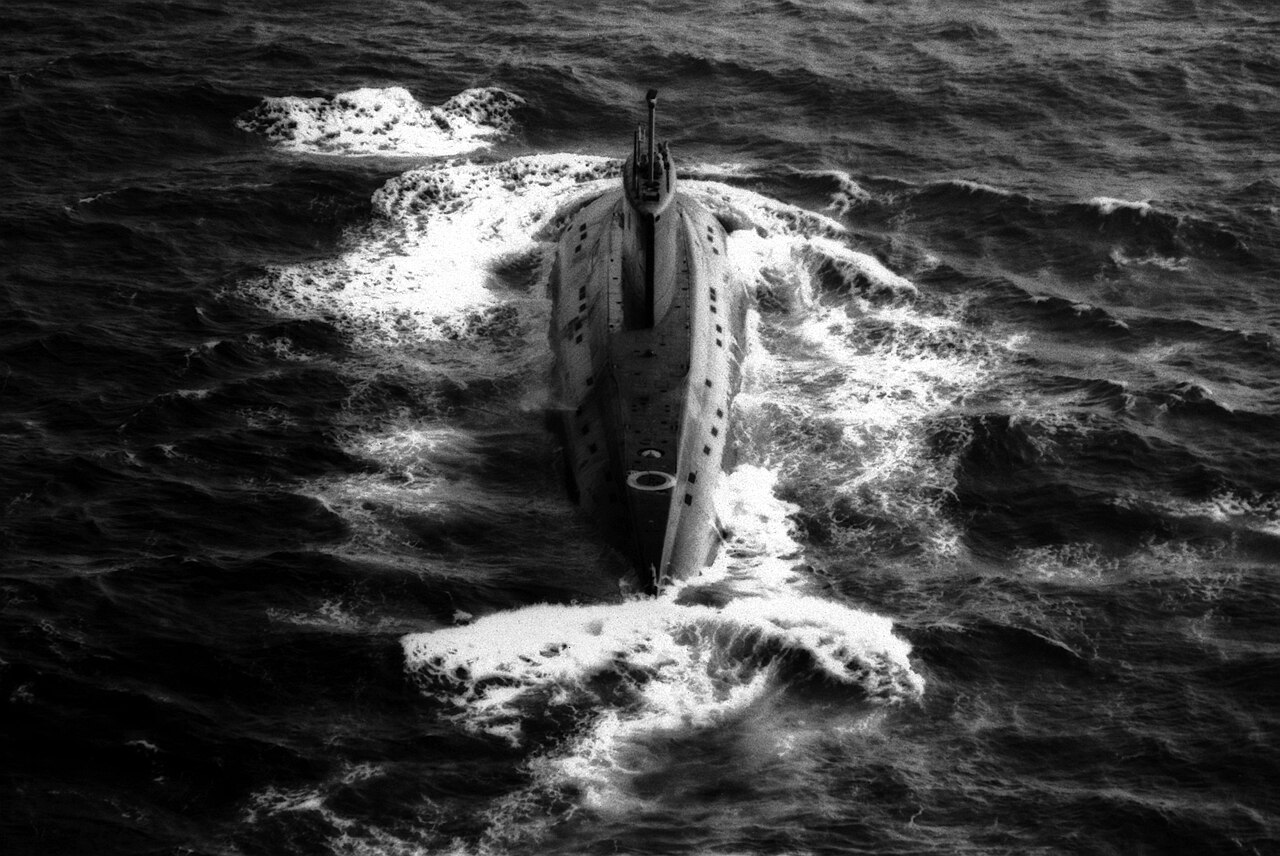
Can Iran close the Strait of Hormuz with naval forces?
Iran can threaten, disrupt, or selectively deny traffic through the Strait of Hormuz. A durable, total, uncontested closure is a much higher bar. The better planning assumption is closure-like pressure: commercial ships pause, insurers reprice, naval escorts slow, mine-clearance forces enter carefully, and route decisions become political as much as technical. In that environment, Iran can create major economic effects without proving that every lane is physically blocked.
The energy stakes are why even partial disruption matters. The U.S. Energy Information Administration reported that oil flows through Hormuz averaged about 20 million barrels per day in 2024, around one-fifth of global petroleum liquids consumption and more than one-quarter of total global seaborne oil trade. That makes the Strait less like an ordinary local waterway and more like a global risk switch. When Iran's naval posture changes there, shipping, fuel prices, LNG routes, and military escort decisions all react.
The common mistake is to imagine closure as a binary gate. In practice, closure can be a spectrum. At one end, Iran issues threats and stages exercises. Next, small boats shadow or harass ships. Then mines, drones, or missiles create a credible hazard. Beyond that, insurers or flag states may stop movement even if a naval commander says a lane is technically open. The Hormuz war risk insurance guide covers that commercial layer; this page focuses on the naval tools that push the market toward it.
| Pressure Level | Naval Action | Commercial Effect | Military Response Problem |
|---|---|---|---|
| Warning | Exercises, radio warnings, patrol surges | Insurance watch, masters slow decision cycles | Separate signaling from imminent attack |
| Harassment | Fast boats shadow tankers or escorts | Delays, rerouting, higher perceived risk | Avoid accidental escalation at close range |
| Hazard | Mines, drones, missile alerts, boarding attempts | Closure-like pause even if lanes remain open | Protect slow mine-clearance and escort units |
| Campaign | Repeated attacks plus denial messaging | Major oil and freight repricing | Suppress a distributed coastal and maritime network |
Why mines are strategically oversized
Naval mines are cheap compared with the time and specialized platforms required to clear them. CRS cites a DIA-reported open-source estimate of more than 5,000 Iranian naval mines in 2019 and notes that estimates in 2025 were generally around 6,000. The inventory can include simple contact mines, limpet mines attached to hulls, moored mines floating below the surface, and bottom mines that respond to acoustic, magnetic, or pressure signatures. The operational challenge is not just finding one mine. It is proving to a commercial operator that the next mile of water is safe enough to justify a voyage.
Mine warfare also changes the target set. A minefield forces mine countermeasure vessels, helicopters, divers, unmanned systems, patrol craft, and escorts into a slow and predictable process. Those assets may operate within range of coastal anti-ship missiles, drones, and fast boats. That is why mines and missiles should be analyzed together rather than as separate hazards. A mine delays movement; a missile or drone threatens the forces trying to clear the delay.
Which weapons matter most in Iranian asymmetric naval warfare?
The most important Iranian naval weapons are the ones that combine. Fast boats are dangerous because they can swarm, scout, harass, fire rockets or missiles, carry mines, and force close-range decisions. Mines are dangerous because they can persist after the minelayer leaves. Coastal anti-ship missiles are dangerous because they cover the water from land. Drones and uncrewed systems are dangerous because they expand surveillance and attack options at low cost. Submarines are dangerous because they add ambiguity below the surface.
No single item is decisive in every scenario. A fast-boat swarm without missile coverage is vulnerable. Mines without protection can be cleared. Coastal missile batteries without sensors are less useful. Submarines without command confidence may stay cautious. The threat rises when those tools are layered into a kill chain: coastal surveillance detects traffic, small boats complicate identification, mines shape the route, missiles cover the clearance area, drones provide reconnaissance or attack, and information operations amplify fear among shippers.
| Tool | Best Use | Limitation | Indicator To Track |
|---|---|---|---|
| Fast boats | Swarm pressure, harassment, minelaying, close-range ambiguity | Vulnerable to airpower and disciplined escort response | Mass departures from known IRGCN areas |
| Mines | Shipping pause and clearance delay | Can hurt Iran's own export routes and partners | Mine warnings, suspected objects, minelayer strikes |
| Anti-ship missiles | Threaten escorts, mine hunters, ports, and tankers | Needs targeting, survivable launchers, and escalation control | Coastal launcher movement and radar activity |
| Drones and USVs | Reconnaissance, decoys, explosive attack, targeting support | Electronic warfare and air defense can disrupt them | Launch-site activity and repeated overwater tracks |
| Submarines | Mine laying, surveillance, ambush risk, uncertainty | Limited numbers and maintenance burden | Port sortie, ASW alerts, loss of contact reporting |
How naval missiles connect to the wider strike picture
Iran's anti-ship missile threat overlaps with its broader missile force. Coastal defense cruise missiles and anti-ship ballistic missile concepts put naval movement into the same risk family as base defense, air defense, and regional strike warning. A tanker captain may care about maritime insurance, but a naval commander must also ask whether an escort route sits inside missile range from the Iranian coast or disputed Gulf islands. For that broader missile context, pair this page with the Iran missile reach guide and the Iran missile attack risk index.
The key analytic rule is not to count missiles as if every launcher fires perfectly. Count them as a constraint on behavior. If commanders believe a mine hunter, destroyer, tanker convoy, or port facility can be targeted, they allocate more escorts, delay movement, fly more surveillance, and demand more suppression of coastal sites. Iran's naval missiles are therefore useful even when they are not fired, because they change how others move.
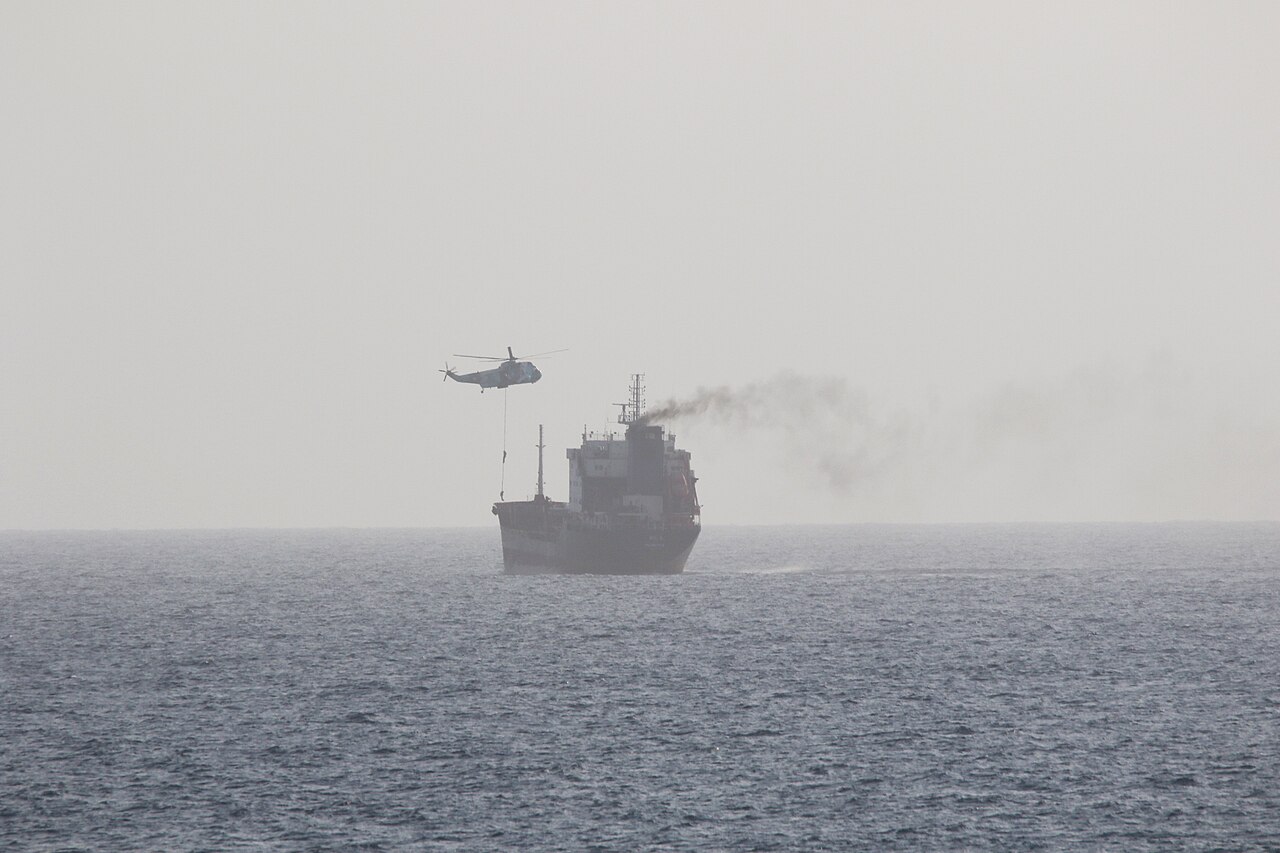
How should readers monitor Persian Gulf naval risk?
Monitor behavior, not rhetoric alone. Iran frequently uses threats, exercises, videos, and official statements as deterrent messaging. Those signals matter, but they should be upgraded only when paired with observable movement: fast-boat concentrations, unusual departures from Bandar Abbas or IRGCN zones, suspected minelaying, vessel seizures, coastal missile alerts, GPS interference, drone activity, mine countermeasure deployments, or insurance notices that translate military risk into commercial stoppage.
A practical monitoring workflow has five questions. Are Iranian naval assets moving from display posture to operational posture? Are commercial ships slowing, turning back, or clustering outside the Strait? Are mine-clearance or escort assets entering a slower, more protected pattern? Are missile, drone, or air-defense systems being repositioned along the coast? Are official statements matching physical activity, or are they trying to create fear without direct action?
That workflow keeps the naval picture connected to the rest of the conflict. Naval disruption can trigger fuel-price pressure covered in Iran war gas price analysis, base-protection concerns covered in U.S. troops in the Middle East, and escalation-branch risk covered in the proxy escalation ladder. A naval incident rarely stays purely naval once tankers, insurance, oil prices, and U.S. force protection are involved.
| Signal | Why It Matters | Confidence Upgrade | Related Page |
|---|---|---|---|
| Fast-boat surge | May indicate harassment, minelaying, or swarm posture | Multiple geolocated sightings near transit lanes | Hormuz map |
| Mine warning | Can create closure-like conditions quickly | Official navigation warning plus mine-clearance activity | Closure timeline |
| Coastal missile movement | Raises risk for escorts and mine hunters | Imagery, official alert, or repeated radar activity | Air defense systems |
| Insurance repricing | Turns military hazard into commercial stoppage | Major P&I or war-risk market movement | War risk insurance |
FAQ: Iran navy capabilities
How strong is Iran's navy?
Iran's navy is not strong in a blue-water fleet comparison with the U.S. Navy, but it is dangerous inside the Persian Gulf because its naval power is built for local denial. The main threat is a layered mix of IRGCN fast boats, mines, coastal missiles, drones, submarines, and geography.
Can Iran close the Strait of Hormuz?
Iran could try to disrupt or selectively deny traffic through the Strait of Hormuz, but a durable total closure is harder than a headline threat suggests. The more realistic danger is closure-like behavior: mines, warnings, missile risk, insurance withdrawal, and tanker delays that make commercial shipping pause even before every lane is physically blocked.
What is the difference between Iran Navy and IRGC Navy?
The Islamic Republic of Iran Navy, or IRIN, is the conventional navy with submarines, larger surface ships, and out-of-area missions. The Islamic Revolutionary Guard Corps Navy, or IRGCN, is the asymmetric force optimized for the Persian Gulf, fast-boat swarms, mines, coastal missiles, and close-range pressure in the Strait of Hormuz.
Does Iran have submarines?
Yes. Iran's conventional navy operates submarines, including larger Kilo-class boats and smaller coastal submarines, giving Tehran options for mine laying, surveillance, and anti-surface pressure around the Gulf of Oman and approaches to Hormuz.
How many naval mines does Iran have?
Public estimates vary, but CRS cites a DIA-reported open-source estimate of more than 5,000 Iranian naval mines in 2019 and notes that later estimates were generally around 6,000. The exact number matters less than deployment method, concealment, and whether mines are paired with missile and drone threats against mine-clearance forces.
External references: Defense Intelligence Agency Iran Military Power statement, U.S. Energy Information Administration chokepoint data, and Congressional Research Service Hormuz report.