Who is winning the Iran war is the wrong question unless the answer separates conventional battlefield advantage, Iran war objectives, Strait of Hormuz leverage, and ceasefire durability. A side can win the air campaign and still lose the political endgame; another side can suffer severe military damage and still avoid defeat if it survives, preserves coercive tools, and pushes costs onto opponents.
The cleanest answer is conditional. The United States and Israel hold the stronger military hand if the scorecard is destroyed launchers, degraded air defenses, sunk vessels, command disruption, and the freedom to strike again. Iran holds the more plausible strategic endurance argument if the scorecard is regime survival, sustained missile or proxy threat, higher energy prices, allied friction, and pressure for a settlement. This page is designed to be read with the site's U.S. vs Iran strategic comparison, Iran air defense systems guide, and Iran ceasefire terms tracker.
What does winning mean in the Iran war?
Winning means achieving stated political objectives at a cost the winner can sustain. That definition matters because the Iran war is not a single-front contest where territory changes hands and the scoreboard is obvious. The core objectives are different for each actor. The United States wants a durable reduction in Iranian nuclear, missile, proxy, and maritime coercion capacity. Israel wants less future strike risk from Iran and its partners. Iran wants regime survival, restored deterrence, and enough leverage to prevent future attacks from becoming routine.
That is why simple claims like "the U.S. won" or "Iran won" miss the structure of the conflict. A battlefield victory answers the question "who destroyed more capability?" A strategic victory answers "whose preferred postwar reality is becoming harder to reverse?" Those answers can diverge for months. A force can destroy an opponent's navy and still face higher oil prices, alliance strain, and a reopening bargain it dislikes. A regime can lose senior leaders and still claim that survival itself defeated coercion.
| Metric | Favors U.S./Israel If... | Favors Iran If... | Best Evidence |
|---|---|---|---|
| Battlefield damage | Launchers, air defenses, naval assets, and production nodes stay degraded | Iran keeps enough mobile capacity to threaten follow-on costs | Imagery, intercept tempo, military briefings, independent reporting |
| Political objectives | Iran accepts enforceable nuclear, missile, and maritime limits | Iran avoids those limits while ending major strikes | Signed terms, inspections, sanctions language, force posture |
| Economic pressure | Hormuz traffic normalizes and oil risk premium falls | Shipping, insurance, energy, and fertilizer costs remain elevated | Tanker flows, war-risk premiums, Brent, LNG spot prices |
| Deterrence | Iran stops direct or proxy attacks because retaliation is too costly | U.S. and Israeli leaders hesitate to strike again because escalation spreads | Attack frequency, alert posture, public red lines, backchannel behavior |
Use this distinction before judging any statement from officials, commentators, or social platforms. "Winning" should not mean the side you prefer looks confident on camera. It should mean the conflict is moving toward that side's preferred durable end state.
Who has the battlefield advantage right now?
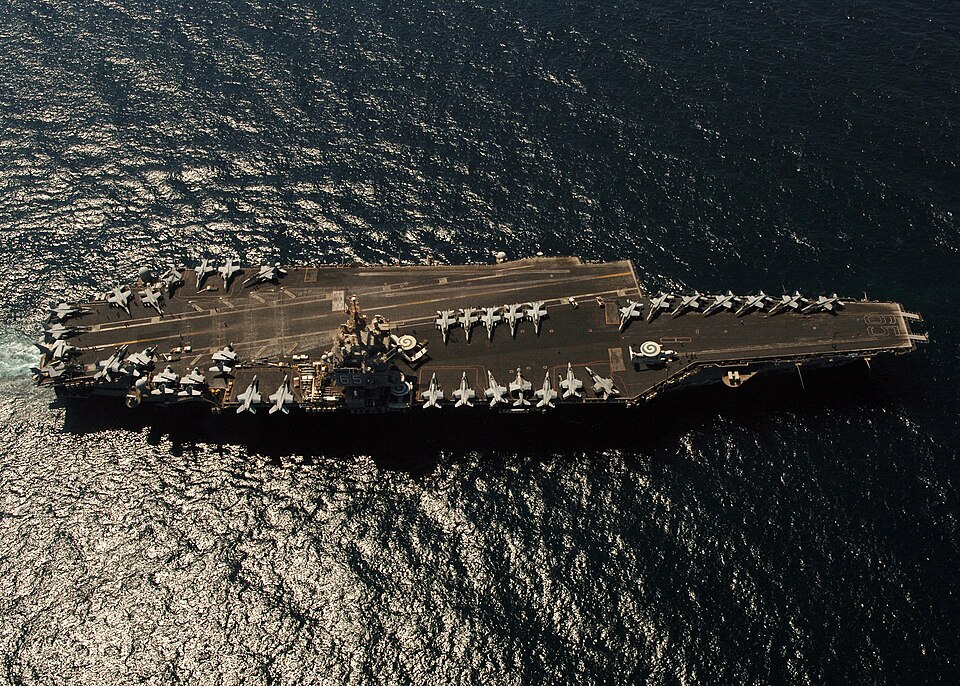
The conventional battlefield advantage belongs to the United States and Israel if publicly reported degradation levels are even broadly accurate. Airpower, intelligence fusion, electronic warfare, standoff weapons, tanker support, and repeated battle-damage assessment give them tools Iran cannot match symmetrically. This is the same structural imbalance described in the site's Iran vs Israel military power comparison: Iran can impose costs, but it does not have equivalent airpower or naval reach.
Battlefield advantage is strongest in four areas. First, air superiority lets attackers revisit target sets, test defenses, and strike production nodes. Second, naval power lets U.S. forces escort, blockade, or pressure maritime routes, even when the mission is expensive. Third, intelligence collection allows new targets to be added after each wave. Fourth, missile defense and base protection reduce the political effect of Iranian retaliation when interceptors, warning time, and dispersal are sufficient.
Iran still has counters. Mobile launchers, mines, coastal missiles, drones, cyber pressure, proxy attacks, and local knowledge can complicate the stronger force's campaign. But those counters are friction tools, not signs of conventional parity. The question is whether the friction changes political decisions faster than air and naval strikes change Iranian capacity.
Why battlefield victory is not the whole result
Battlefield metrics can peak early and then lose relevance if they do not produce compliance. Destroyed equipment matters most when it prevents the opponent from doing something important: firing missiles, blocking shipping, rebuilding nuclear capacity, or directing proxy attacks. If Iran loses equipment but keeps enough coercive options to shape negotiations, the military scorecard stops short of strategic victory.

Is Iran winning strategically by enduring?
Iran's strategic theory of victory is endurance. It does not need to defeat the United States or Israel in a conventional exchange. It needs to survive, retain enough missile and proxy capacity to make future attacks risky, keep the nuclear question unresolved enough to preserve leverage, and convince external actors that the economic cost of continued pressure is unacceptable.
This is why "Iran is losing militarily" and "Iran may be improving its bargaining position" can both be true. If Iran's command structure remains functional, if the regime keeps internal control, if proxy networks continue to create pressure outside Iran, and if the Strait of Hormuz remains a pricing weapon, Tehran can claim that coercion did not force surrender. That claim gets stronger the longer opponents redefine victory downward from regime change or permanent denial to temporary degradation or a pause.
The weakness in Iran's endurance argument is cumulative damage. A regime can survive and still be weaker. A missile program can rebuild and still lose months or years. A proxy network can harass and still fail to reverse battlefield losses. The most disciplined reading is that Iran is not winning on combat power, but it may be preventing its opponents from converting combat power into a clean political outcome.
| Endurance Signal | Iran Stronger If... | Iran Weaker If... |
|---|---|---|
| Regime cohesion | Security forces, ministries, and succession mechanisms remain coordinated | Elite splits, local defiance, or command confusion becomes visible |
| Retaliatory capacity | Missile, drone, cyber, or proxy attacks persist after repeated strike waves | Launch tempo falls and claims exceed observable effects |
| Economic coercion | Hormuz risk keeps moving oil, LNG, freight, and insurance pricing | Traffic normalizes without concessions Iran values |
| Diplomatic leverage | Talks center on payments, sanctions relief, maritime control, or nuclear ambiguity | Talks center on verified limits and unilateral Iranian compliance |
How do Hormuz, oil, and LNG change the scorecard?
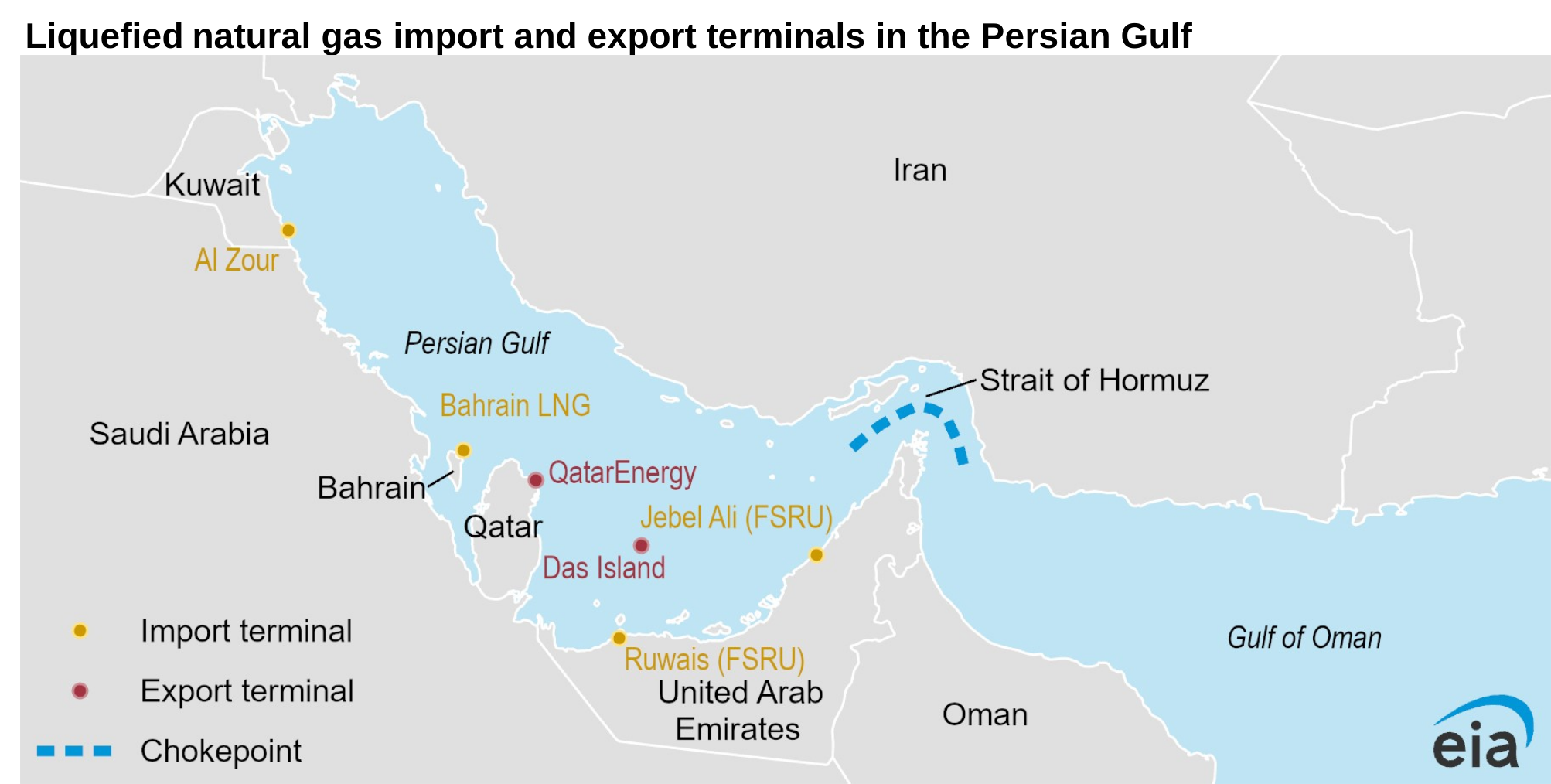
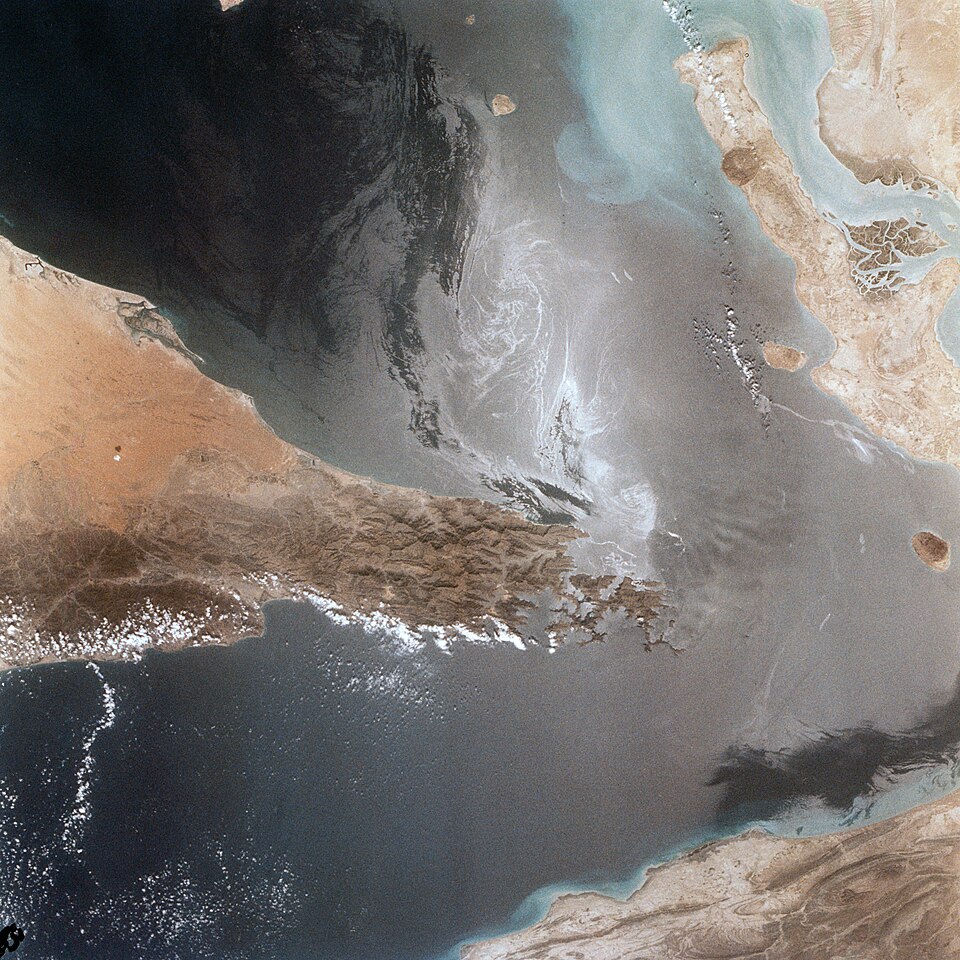
Hormuz is the strongest reason the answer to who is winning the Iran war cannot be reduced to target counts. The U.S. Energy Information Administration reported that flows through the Strait of Hormuz in 2024 and the first quarter of 2025 represented more than one-quarter of global seaborne oil trade and about one-fifth of global oil and petroleum product consumption. It also noted that about one-fifth of global LNG trade moved through the same chokepoint, mostly from Qatar.
That scale turns maritime insecurity into global leverage. If tankers, crews, insurers, or charterers behave as if the route is unsafe, Iran can impose costs far beyond the battlefield. The price mechanism then becomes part of the war. Consumers pay more for gasoline and electricity. Importers compete for alternative cargoes. Fertilizer and petrochemical supply chains tighten. Allies that supported the air campaign may still pressure Washington to end the disruption quickly.
This does not automatically mean Iran is winning. If maritime pressure causes regional states to align more closely with the United States, accelerates alternative routes, or justifies harsher sanctions and strikes, the same tactic can backfire. The scorecard should therefore separate short-term leverage from long-term position. A chokepoint threat can win a negotiation window and lose regional trust at the same time.
Did the United States achieve its stated objectives?
The United States can claim success only against objectives it can define and verify. If the objective was to degrade Iranian air defenses, production facilities, naval assets, and missile launch capacity, the battlefield case is plausible. If the objective was to permanently end Iranian nuclear risk, force regime change, stop proxy warfare, and restore stable regional trade on U.S. terms, the claim is much harder.
PolitiFact's April 2026 fact-check captured the problem with broad victory language: officials claimed major battlefield wins, but unresolved questions remained around Hormuz commerce, gas prices, Iran's new leadership behavior, arsenal restocking, and whether Iran had made binding commitments. That gap between damage and durable terms is where exaggerated victory claims usually enter the information environment.
A real victory claim should answer four questions: what changed, who verified it, how long it can last, and what the winner paid to get it.
The same test applies to Iran. Tehran cannot simply say it won because it survived. Survival is the baseline for an endurance strategy, not the full end state. Iran would need to show that survival preserved meaningful deterrence, forced concessions, protected enough economic capacity, and prevented future strikes from becoming normal. Without those outcomes, "we endured" is a narrower claim than "we won."
What would count as a durable Iran war victory?
A durable victory requires evidence that remains true after headlines cool. For the United States and Israel, the strongest version would include verified limits on Iran's nuclear pathway, a measurable reduction in missile and drone threat, reduced proxy tempo, reopened maritime traffic, and no need for repeated major strikes to maintain the result. For Iran, the strongest version would include regime survival, preserved bargaining leverage, no enforceable surrender of core programs, and a cost structure that discourages future attacks.
The likely outcome may be neither side getting its strongest version. Many modern wars end in contested settlements where each side preserves a story of victory while accepting a compromised reality. That is why this page treats "Iran war stalemate" as a serious possibility. A stalemate does not mean nothing changed. It means the battlefield changed faster than the political settlement, leaving both sides with enough evidence to claim success and enough unresolved risk to keep the conflict alive.
| Outcome Test | What To Measure | Why It Matters | Companion Page |
|---|---|---|---|
| Nuclear pathway | Monitoring access, material accounting, enrichment limits, site repair | Temporary damage does not equal permanent denial | Iran nuclear weapons evidence |
| Missile threat | Launch tempo, production recovery, mobile launcher survival | Deterrence turns on what Iran can still hold at risk | Iran missile attack risk index |
| Maritime normalization | Transit volume, insurance premiums, escort demand, port delays | Hormuz is where battlefield success becomes economic reality | Hormuz insurance risk |
| Regional posture | Base alert levels, interceptor drawdown, troop movement, airspace reopening | Force posture reveals whether leaders believe the war is actually ending | U.S. troops in the Middle East |
How should readers score new Iran war victory claims?
Start with objectives, not rhetoric. List what each side said it wanted before the claim was made. Then score whether the claim proves an outcome or merely describes an action. "We struck 13,000 targets" describes activity. "Iran accepted verified limits that prevent rebuild for a defined period" describes an outcome. Activity can support a victory claim, but it cannot replace one.
Next, check whether the metric is reversible. Destroyed equipment may be replaceable. A closed sea lane may reopen. A ceasefire may pause firing without settling the cause of the war. A regime may survive today and fracture later. Reversible facts should be weighted lower than durable facts unless they create a new political constraint.
Finally, compare costs against benefits. If a side achieves battlefield damage but burns through scarce interceptors, damages alliances, raises global energy prices, and still accepts a compromise, the result is mixed. If a side survives but loses key commanders, military infrastructure, and future freedom of action, that result is also mixed. The best answer to who is winning the Iran war may therefore be "winning where, and for how long?"
FAQ: Who is winning the Iran war?
Who is winning the Iran war right now?
No side is winning decisively across every metric. The United States and Israel have the clearer conventional battlefield advantage, while Iran's strongest claim is strategic endurance, cost imposition, and leverage over regional trade.
Did the US win the Iran war?
The United States can claim battlefield gains if Iranian military, nuclear, air-defense, and naval capacity remain degraded. It cannot claim a durable victory unless those gains produce enforceable political terms, lower regional risk, and restored freedom of commerce.
Is Iran winning strategically?
Iran is not winning in a conventional military sense if its forces, leadership network, and production base are badly damaged. It can still win strategically if it survives, keeps enough retaliatory capacity to deter future strikes, and convinces opponents that coercion costs more than negotiation.
What would prove the Iran war is ending?
The strongest evidence would be a signed ceasefire framework, verified reopening of Hormuz traffic, lower missile and drone alert levels, restored inspections or monitoring, and a sustained drop in insurance, oil, and force-protection risk.
External references: CSIS on who is winning the Iran war, PolitiFact on total-victory claims, and EIA on Strait of Hormuz energy flows.