Iran air defense systems matter because any 2026 strike scenario over Iranian territory is shaped by an integrated air defense system, not by a single missile battery shown in a parade. The practical question is how Bavar-373, Iran S-300 system sites, 3rd Khordad missile units, Iranian radar systems, and short-range surface-to-air missiles work together when a real attack includes decoys, jamming, standoff weapons, and follow-on waves.
The strongest way to read the network is to separate three jobs: detection, engagement, and survival. Detection asks whether radars see enough of the incoming package early enough to cue interceptors. Engagement asks whether missile batteries have the range, geometry, and fire-control quality to threaten aircraft or cruise missiles. Survival asks whether crews can move, hide, reload, and keep communicating after the attacker begins suppression. Those distinctions are why this page pairs naturally with the site's Iran vs Israel military power comparison, Iran drone swarm tactics analysis, and Gulf air defense interceptor capacity model.
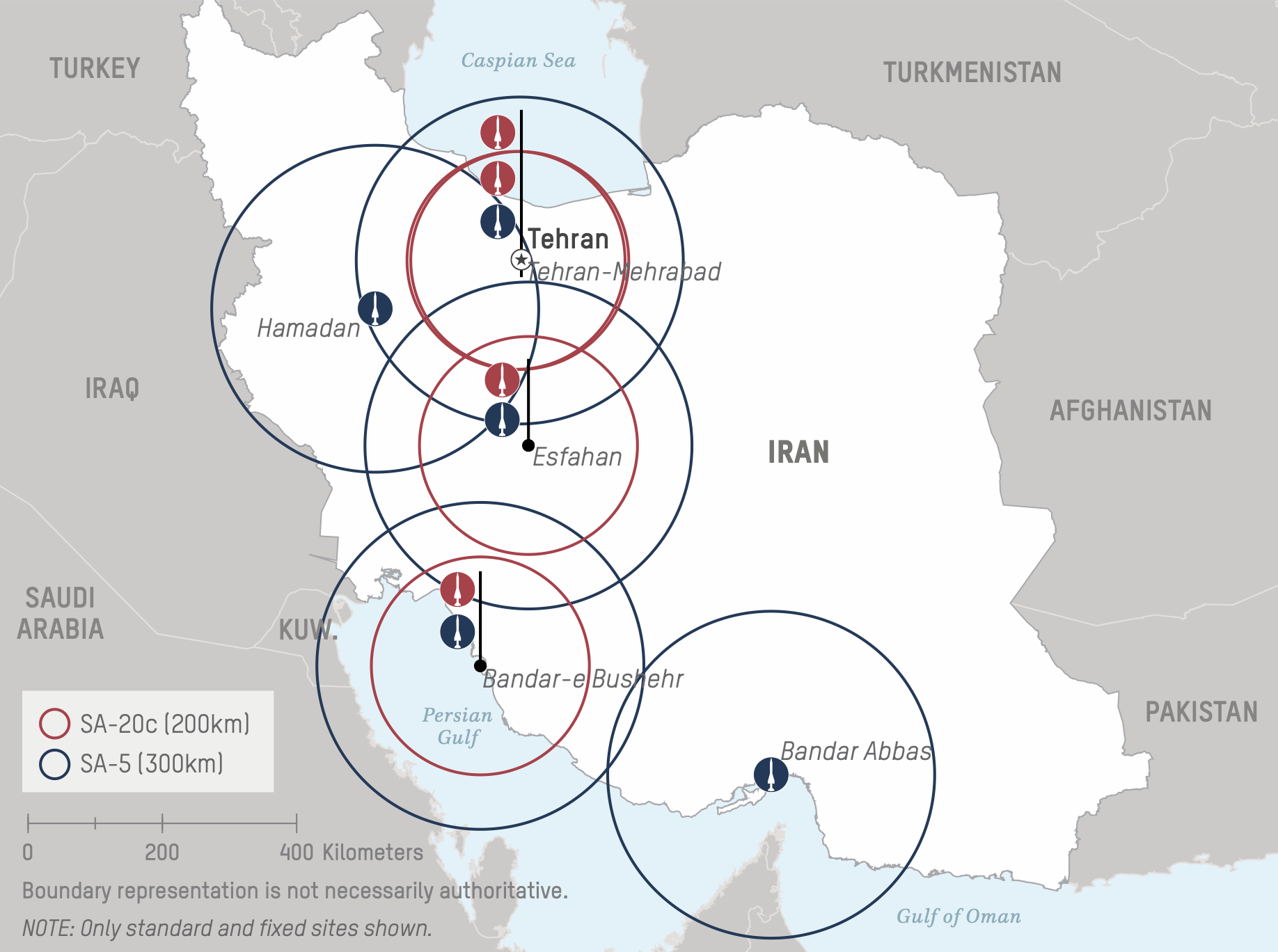
What air defense systems does Iran have?
Iran fields a mixed inventory built from imported systems, domestic programs, upgraded legacy equipment, and short-range defensive layers. Publicly discussed systems include Bavar-373, S-300PMU-2, 3rd Khordad, Khordad-15, Raad, Talash, Tor-M1, Mersad, Sayyad-family missiles, anti-aircraft guns, and man-portable air-defense systems. The inventory is broad because Iran has to defend many different target categories: nuclear facilities, command sites, air bases, missile storage areas, industrial nodes, major cities, and mobile units that may shift during a crisis.
That mix creates strength and friction at the same time. Diversity makes it harder for an attacker to plan against only one radar or missile type, but it also complicates training, maintenance, command integration, and ammunition management. A layered defense can force aircraft and cruise missiles into worse routes. A fragmented defense can also create gaps if each battery has to fight in isolation. The difference between those two outcomes is command-and-control quality.
| Layer | Representative Systems | Primary Job | Key Vulnerability |
|---|---|---|---|
| Long range | Bavar-373, S-300PMU-2 | Threaten aircraft and standoff platforms near priority zones | Radar exposure, limited numbers, complex reload and relocation |
| Medium range | 3rd Khordad, Khordad-15, Raad, Talash | Protect corridors, bases, and mobile force concentrations | Susceptibility to decoys, electronic attack, and saturation |
| Short range | Tor-M1, guns, MANPADS, point-defense units | Defend key facilities against drones, helicopters, and low-flying threats | Small defended radius and high workload during mass raids |
| Sensor network | Early-warning radar, acquisition radar, passive sensors | Find, classify, and hand off targets | Jamming, anti-radiation missiles, cyber disruption, and false tracks |
For readers tracking nuclear-site risk, the air defense question should be paired with nuclear facilities in Iran map and Fordow bunker-buster limits. A facility's depth or hardening matters, but so does whether nearby sensors and launchers can force strike aircraft to launch from worse positions or spend more weapons before reaching the target set.
Which Iranian air defense systems matter most?
No single Iranian system decides the whole contest. Long-range batteries matter because they shape the attacker's route and altitude planning. Medium-range mobile systems matter because they create uncertainty after the first strike wave. Short-range defenses matter because drones and low-cost munitions increasingly overload higher-value interceptors. The most important systems are therefore the ones that survive long enough to keep affecting the attacker's decision cycle.
Long-range layer: Bavar-373 and S-300
Bavar-373 is Iran's flagship indigenous long-range air defense program. Iranian officials have advertised major range upgrades, and the system is often presented as a symbol of self-reliance after years of sanctions and delayed foreign deliveries. Analysts should treat those claims as a starting point, not the final answer. Long-range SAM performance depends on radar quality, missile guidance, crew training, network integration, environmental conditions, and how quickly a launcher can displace after firing.
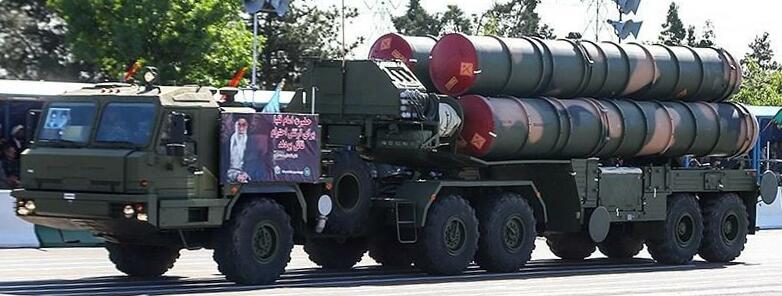
The S-300PMU-2 layer matters for a different reason. It is an imported, better-known system family with a wider public analytic record than most Iranian designs. Its presence can force attackers to plan suppression against specific radar and command components before higher-risk aircraft enter certain zones. That does not mean the system makes a site untouchable. It means the attacker has to allocate electronic warfare, decoys, anti-radiation weapons, standoff munitions, intelligence collection, and battle-damage assessment to neutralize or bypass it.
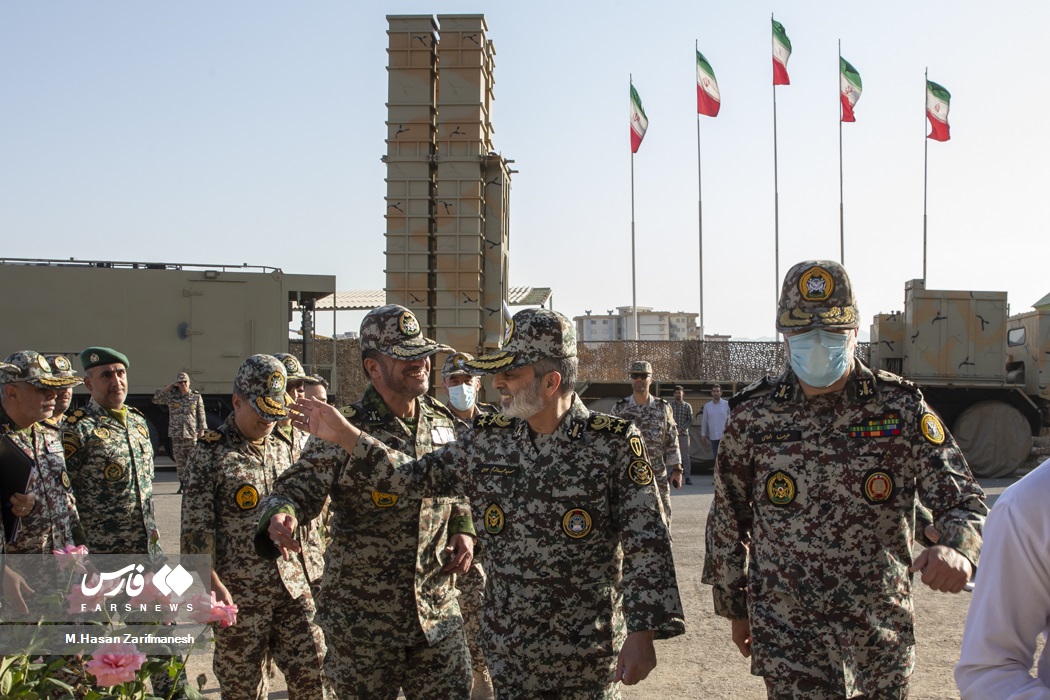
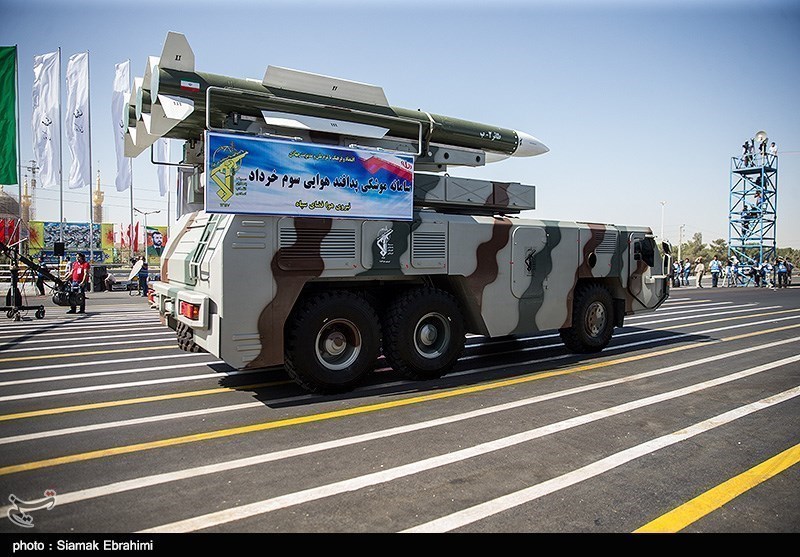
Medium and point defense: Khordad, Raad, Tor-M1, and guns
Medium-range systems such as 3rd Khordad and Khordad-15 are central to Iran's survivable defense concept because they can be more mobile and dispersed than fixed strategic assets. They are the layer most likely to create tactical surprises if a strike planner assumes the network has been fully blinded. Their value rises when they can receive cueing from outside sensors and keep launchers hidden until a favorable engagement window appears.
Point defenses are less glamorous but increasingly important. Drones, loitering munitions, small cruise missiles, and decoys can force a defender to spend expensive interceptors on cheap targets. Short-range systems, guns, and MANPADS help preserve higher-end missiles for higher-value threats. The hard part is discrimination: deciding what must be engaged immediately, what can be ignored, and what is bait designed to expose a radar or launcher.
How strong are Iran air defense systems in 2026?
Iran's air defense is strong enough to complicate planning, raise risk, and protect some areas better than others. It is not strong enough to be modeled as a sealed national shield. The country is large, the defended asset list is long, and the most capable systems cannot be everywhere at once. The practical strength is local and conditional: around a priority target with prepared crews and layered sensors, the defense can be dangerous; across the entire country under sustained attack, gaps and reload pressure become more visible.
Three variables matter more than the name painted on a launcher. First is sensor persistence: radars have to detect, classify, and track enough of the incoming package without staying on air long enough to be targeted. Second is command resilience: the network has to pass useful tracks to batteries even when communications are degraded. Third is inventory depth: interceptors, spare radars, launch vehicles, trained crews, generator fuel, and repair capacity have to last beyond the opening hours.
The network's biggest advantage is geography. Mountains, distance, and dispersed infrastructure can make route planning difficult, especially when an attacker must avoid civilian airspace, manage tanker support, and coordinate standoff launches. The biggest disadvantage is exposure. Once a radar emits or a launcher fires, it becomes part of a detectable pattern. A disciplined crew can move. A predictable crew becomes a target.
| Assessment Area | Stronger Signal | Weaker Signal | What To Watch |
|---|---|---|---|
| Radar discipline | Short, varied emissions and rapid relocation | Static radar patterns and predictable cueing | Open-source geolocation, NOTAM patterns, and post-strike imagery |
| Battery mobility | Launchers seen dispersed, camouflaged, and moving | Repeated use of known garrison or parade positions | Satellite imagery, road convoys, and local visual reports |
| Network integration | Multiple layers engaging different threat types coherently | Isolated firing with poor target discrimination | Intercept claims, debris patterns, and timing consistency |
| Reload endurance | Continued launches after multiple raid windows | Early activity followed by silence | Tempo of official claims and observable resupply movement |
Can Iran air defense systems stop US or Israeli airstrikes?
Iran air defense systems can impose costs and sometimes deny specific routes, but they are unlikely to stop a coordinated US or Israeli campaign by themselves. The better question is how much friction they create. Friction can mean forcing aircraft to launch from farther away, requiring more standoff weapons, stretching tanker plans, slowing battle-damage assessment, raising pilot risk, or limiting how many targets can be serviced in one wave.
Against Israel, distance, basing, overflight, refueling, and target depth are critical. A defense that forces longer routes or more standoff launches can change the scale of what is practical in one night. Against the United States, the problem is different because US forces can bring deeper electronic warfare, stealth platforms, cruise missiles, and suppression assets. In that case, Iran's goal is not absolute denial. It is to preserve enough surviving capability to make repeated waves expensive and politically visible.
This distinction is why Al Udeid Air Base in Qatar, US troops in the Middle East, and Iran missile range analysis belong in the same reading path. Air defense does not operate in a vacuum. It interacts with basing, refueling, missile retaliation, airspace restrictions, and the attacker's tolerance for time and risk.
The real contest is not shield versus sword. It is tempo: can the defender keep sensors and launchers useful while the attacker keeps finding, confusing, and suppressing them?
For cruise missiles and drones, the answer is also mixed. Low-flying threats reduce radar horizon, and mass attacks can force triage. At the same time, slow drones and some cruise missiles are vulnerable if they enter well-covered zones. Defenders with good cueing can engage them effectively; defenders reacting late may waste missiles or reveal launchers to hit low-value targets.
What does a SEAD campaign do to Iran air defense?
SEAD means suppression of enemy air defenses. It is not simply bombing missile batteries. A serious SEAD campaign attacks the defender's decision chain: early warning, radar emissions, communications, command posts, launchers, reloads, decoy discrimination, repair capacity, and crew confidence. The aim is to make the defender choose between emitting and being targeted, staying silent and missing threats, firing too early, or moving so often that coverage becomes unreliable.
Modern SEAD is a sequence. The attacker collects intelligence, maps emitters, tests reactions with drones or decoys, jams or spoofs sensors, fires anti-radiation weapons, hits known command nodes, assesses damage, then repeats. If a defender survives the first sequence, the attacker updates the target deck. If the defender reveals new radars or launchers, those assets become part of the next sequence. This is why claims after the first night can mislead: a battery that survives day one may still be found by day three.
The defender's counter-SEAD playbook is equally important. Crews can use emission control, decoys, dummy radars, camouflage, mobility, dispersed reload sites, passive sensors, and shoot-and-scoot tactics. The challenge is coordination. Too much silence creates blind spots. Too much emission creates targeting opportunities. Too much movement can break coverage. The strongest network is one that makes these tradeoffs deliberately instead of reacting to every alert.
| SEAD Pressure | Defender Response | Risk If Overused |
|---|---|---|
| Anti-radiation weapons | Short radar emissions and relocation | Reduced track quality and delayed engagement |
| Decoys and drones | Layered identification and fire discipline | Letting real threats approach too closely |
| Electronic attack | Frequency agility and alternate sensors | Fragmented picture if units stop sharing tracks |
| Command-node strikes | Distributed control and local autonomy | Uncoordinated engagements and friendly-air risk |
How should analysts read new air-defense claims?
Air-defense claims are some of the easiest wartime claims to overstate. Intercept counts can mix drones, debris, decoys, and missiles. Damage claims can describe one radar or one launcher as if the entire network were destroyed. Parade footage can show capability without proving training level, battery readiness, or deployment density. The disciplined approach is to demand multiple categories of evidence before changing the baseline.
Start with language. "Engaged" does not mean "destroyed." "Detected" does not mean "tracked to intercept quality." "Shot down" does not mean the protected target survived. "System destroyed" may mean a launcher, radar, command vehicle, support truck, or decoy. Next, look at geography. A claimed intercept far from a priority site may have little bearing on whether a nuclear facility or command bunker is protected. Finally, compare timing. Claims that arrive faster than imagery, debris verification, or independent reporting should be treated as provisional.
The best open-source workflow is a matrix, not a headline. Put official statements, satellite imagery, local video, debris photos, flight activity, NOTAMs, and independent reporting in separate columns. Score each line for confidence and operational relevance. A low-confidence report can still matter if it points to a repeatable pattern, but it should not override higher-confidence evidence from imagery or multiple independent confirmations.
What are the 30-60-90 day air defense signals?
Over 30 days, the strongest indicators are deployment movement and radar behavior. If Iran disperses systems from peacetime sites, hardens command nodes, increases camouflage, and changes radar emission patterns, the network is preparing for higher-risk conditions. If activity remains symbolic or concentrated around public displays, the posture may be more political than operational.
Over 60 days, watch logistics. Sustained readiness requires spare parts, generator fuel, missile storage security, crew rotation, maintenance cycles, and communications redundancy. An air defense network can look impressive in a single video and still degrade if crews are exhausted or reloads are scarce. Conversely, quiet logistics movement may reveal a more serious posture than public rhetoric.
Over 90 days, watch integration. The question becomes whether Iran can adapt after observing attacker tactics. Do batteries change locations after strikes? Do radars alter emission discipline? Do official claims become more precise or more inflated? Does the network preserve enough medium-range capacity to keep attackers cautious? Those signals matter more than any single announcement of a new missile or radar.
| Window | Signal To Track | Escalation Meaning | Best Companion Page |
|---|---|---|---|
| 30 days | Dispersal, camouflage, radar pattern shifts | Higher near-term strike concern or readiness drill | Night operations |
| 60 days | Reload, fuel, repair, and crew-rotation indicators | Network preparing for sustained alert instead of symbolic posture | Interceptor capacity |
| 90 days | Adaptation after probes, strikes, or electronic attack | Defense learning curve improving or degrading | Missile risk index |
Bottom line for Iran air defense systems
The most accurate summary is that Iran air defense systems create a serious but uneven defensive problem. They can protect priority pockets, force more careful route planning, and make a campaign more expensive. They cannot be assumed to block a determined attacker with deep suppression tools, especially over repeated waves. The network's value is measured by endurance, uncertainty, and the attacker's extra cost, not by a binary "can stop" or "cannot stop" label.
For decision teams, the practical model is three-tiered. Treat long-range systems as area-shaping assets. Treat mobile medium-range systems as uncertainty generators. Treat short-range defenses as workload managers that preserve higher-value interceptors. Then judge the whole network by whether sensors, launchers, command nodes, and reloads continue functioning together after the first shock. That is the difference between hardware inventory and combat power.
FAQ: Iran air defense systems
What air defense systems does Iran have?
Iran fields a mixed air defense inventory that includes long-range systems such as Bavar-373 and S-300PMU-2, medium-range systems such as 3rd Khordad and Khordad-15, and shorter-range guns, missiles, and MANPADS. The operational question is how well these pieces share tracking data under pressure.
How strong are Iran air defense systems?
Iran's air defense is strongest when it can combine dispersed radars, mobile launchers, and layered engagement zones around priority sites. It is weaker against sustained suppression campaigns that force radars to move, shut down, or spend missiles faster than crews can reconstitute the network.
Can Iran air defense systems stop US or Israeli airstrikes?
They can complicate airstrikes, raise costs, and create localized risk, but they should not be treated as a guaranteed shield against a coordinated US or Israeli campaign. The decisive factors are warning time, electronic attack, missile inventory, target priority, and how many waves the attacker can sustain.
What is Bavar-373?
Bavar-373 is Iran's indigenous long-range surface-to-air missile system, promoted as a strategic layer for high-value air defense. Public claims about range and performance are significant, but analysts still judge it through observed deployment patterns, radar integration, and wartime survivability.
External references: DIA Iran Military Power report, Washington Institute Iranian air-defense system table, and CSIS Missile Threat on Bavar-373.