Does Iran have nuclear weapons? No public evidence proves that Iran has a deployed nuclear bomb, but the Iran nuclear weapons program question cannot be answered by looking only for a finished warhead because uranium enrichment, breakout time, IAEA Iran inspections, and delivery systems each move on different timelines.
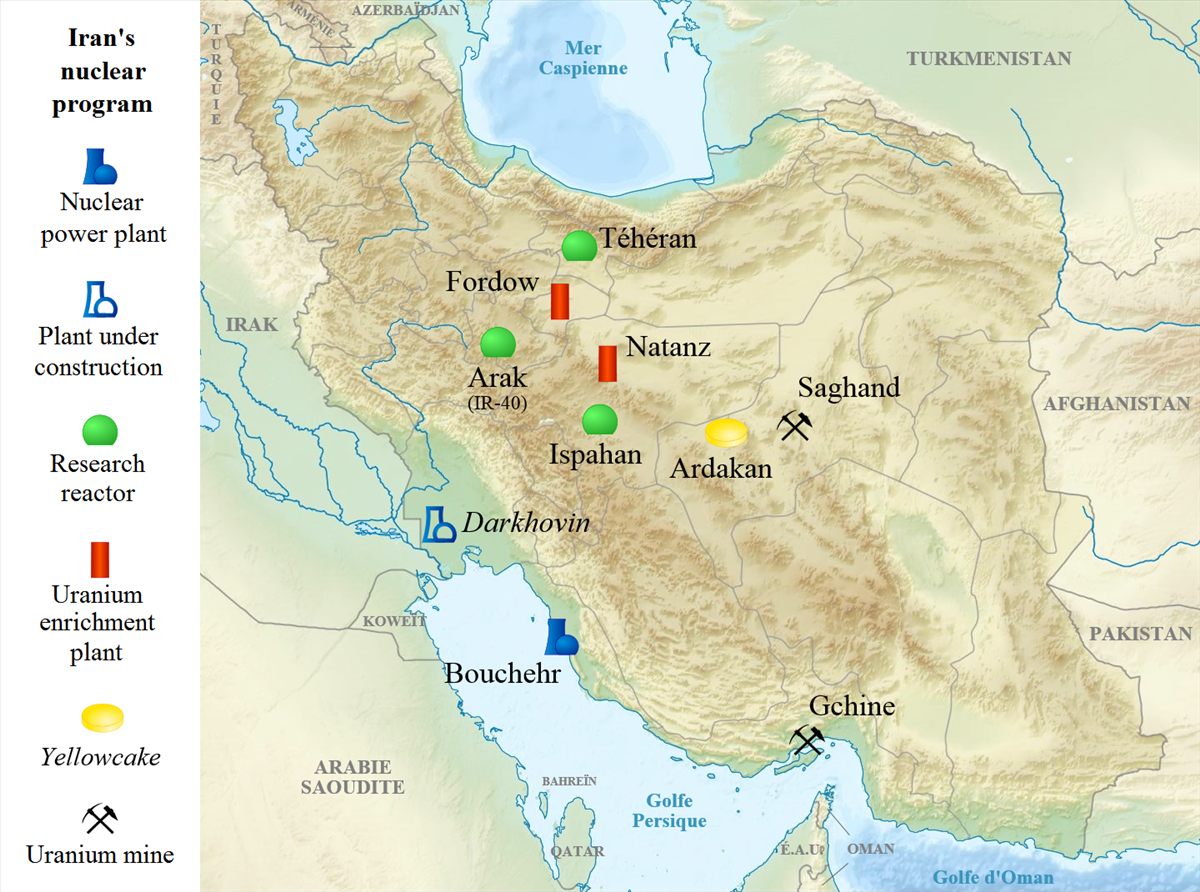
The practical answer is a three-part assessment: Iran has significant nuclear material capability, the public record does not prove an assembled weapon, and reduced monitoring makes every confident claim weaker than it would be under full transparency. That is why this page treats "has a bomb" as a higher threshold than "can move toward one quickly." Readers who need site geography should pair this guide with our nuclear facilities in Iran map; readers focused on timing should keep the Fordow breakout timeline analysis open alongside it.

Does Iran already have a nuclear bomb?
The best public answer is no: there is no verified open-source record showing Iran possesses a tested, deployed, or publicly acknowledged nuclear weapon. That matters because a nuclear weapon is not just enriched uranium. A fielded weapon requires fissile material at the right enrichment level, conversion into usable metal or components, a workable explosive package, reliability confidence, command-and-control arrangements, and a delivery concept that can survive political and military pressure.
That higher threshold is why analysts avoid turning every uranium-stockpile headline into a claim that Iran already has a bomb. A large stockpile can shorten the path to weapons-grade material, but it does not automatically prove weaponization. A state can sit in the space often called a nuclear threshold state: technically close enough to raise alarm, but not publicly confirmed as having crossed into an assembled arsenal.
For Iran, the public uncertainty is amplified by reduced transparency. The IAEA has reported serious limits on JCPOA-related verification and monitoring, including loss of continuity of knowledge in important categories. That does not equal proof of a weapon. It means outside observers have less ability to close every gap confidently, so the correct assessment must carry an uncertainty band.
Why the wording matters
The phrase "has nuclear weapons" implies possession of a usable device or arsenal. The phrase "has nuclear weapons capability" usually means the state has enough technology, material, and industrial base to make a weapon under some scenario. The second claim can be true before the first claim is proven. Treating them as identical leads to bad analysis, exaggerated timelines, and poor decisions about escalation risk.
This distinction also explains why Iran's missile program is relevant but not conclusive. Missile range and accuracy matter for delivery once a weapon exists, and our Iran missile reach guide covers that side of the problem. Missile capability does not prove a nuclear payload has been built or integrated.
What counts as nuclear weapons capability?
A serious capability assessment has four layers. The first is fissile material: uranium enriched to levels that can be further enriched to weapons-grade. The second is production infrastructure: centrifuges, feedstock, conversion facilities, and secure sites. The third is weaponization: design, high-explosive testing, neutron initiation, metallurgy, miniaturization, and reliability work. The fourth is delivery and command: aircraft, missiles, storage, custody, authorization, and operational doctrine.
Iran's public risk profile is strongest in the first two layers. The IAEA's May 2025 verification report estimated that Iran had 408.6 kilograms of uranium enriched up to 60 percent U-235 in UF6 form, plus a much larger total enriched uranium stockpile. The same report described serious monitoring constraints and stated that the agency had not been able to verify Iran's total enriched uranium stockpile precisely on any given day since February 2021.
| Layer | Public Status | Why It Matters | What To Watch |
|---|---|---|---|
| Fissile material | High concern | Shortens pathway to weapons-grade uranium | 60 percent stockpile, location, and access |
| Production infrastructure | Damaged but adaptive | Determines how fast enrichment could resume or shift | Centrifuge installation, feed rates, site repairs |
| Weaponization | Not publicly proven | Converts material into a usable device | Explosive testing, design work, unusual procurement |
| Delivery integration | Relevant but separate | Turns a device into an operational weapon | Warhead fit, missile testing, command structure |
Why 60 percent uranium changes the risk calculus
Uranium enriched to 60 percent is not the same as weapons-grade material, commonly associated with around 90 percent enrichment. But the enrichment process is nonlinear: much of the separative work needed to go from natural uranium to weapons-grade has already been done by the time material reaches 60 percent. That is why 60 percent stockpile size is a decisive risk indicator even when no bomb is publicly confirmed.
The more specific question is not whether 60 percent material is a bomb. It is how quickly that material could be enriched further if a political decision were made, whether inspectors could detect the move in time, and whether the state has a parallel weaponization path ready. That is also why damage to one site does not automatically end the issue. The Fordow bunker-buster analysis explains how geology, depth, and redundancy complicate claims of permanent elimination.
How close is Iran to a nuclear weapon?
"Close" depends on which clock is being measured. Breakout time is usually the uranium clock: how long it would take to produce enough weapons-grade uranium for one device. Weaponization time is the engineering clock: how long it would take to convert that material into a usable nuclear explosive. Deployment time is the military clock: how long it would take to move from a device to a reliable fielded weapon. Those clocks can overlap, but they are not identical.
Public debate often collapses all three into a single number because it is easier to communicate. That simplification is dangerous. A state could be weeks from producing enough weapons-grade uranium under one scenario but still face additional work before fielding a credible weapon. Conversely, if weaponization work had already been done in secret, the time between material production and a usable device could be shorter than public estimates assume.
The most defensible approach is scenario-based. In a low-transparency scenario, assume higher uncertainty and shorter warning. In a restored-inspection scenario, assume better detection and more policy time. In a disrupted-infrastructure scenario, assume physical delays but also possible dispersal, concealment, and unknown stockpile movement. Readers following this question through a regional crisis should also compare nuclear timing against missile attack risk and the proxy escalation ladder, because nuclear anxiety often travels alongside non-nuclear retaliation pathways.
| Scenario | Breakout Signal | Weaponization Signal | Policy Meaning |
|---|---|---|---|
| Threshold pressure | More 60 percent stockpile, ambiguous access | No public proof of device assembly | High leverage, not confirmed arsenal |
| Covert dash | Unexplained material movement or enrichment spike | Procurement and testing anomalies | Fast escalation and intelligence warning problem |
| Verified freeze | Stockpile capped, diluted, or exported | No active weaponization indicators | Risk declines if access is durable |
What the public record can and cannot prove
The public record can show enrichment levels, declared facilities, broad inspection disputes, sanctions actions, military strikes, and official assessments. It usually cannot show every covert lab, procurement network, internal leadership order, or classified intelligence intercept. That is why a responsible answer must say "not publicly proven" rather than "impossible" or "certain."
Congressional researchers have described the same analytic split: enrichment expansion has reduced the time needed to produce enough highly enriched uranium, while weapon production involves additional steps beyond breakout. The ODNI's 2026 threat reporting also treats Iran's WMD-related capabilities as an intelligence-monitoring problem after damage to nuclear infrastructure and disputes over IAEA access. Those are not the same as a public confirmation of a finished weapon, but they are more serious than ordinary civilian nuclear activity.
What evidence would change the assessment?
The strongest evidence would be direct confirmation of weaponization. That could include a nuclear test, credible official disclosure, recovered documentation, verified intelligence released by multiple governments, or IAEA findings showing undeclared nuclear material connected to weapons work. Short of that, the next tier would be converging indicators: unexplained movement of high-enriched uranium, sudden denial of access to critical locations, procurement of specialized components, and activity at military sites consistent with device design or integration.
Single indicators should be handled carefully. A blocked inspection can be political signaling rather than proof of a bomb. A missile test can be conventional deterrence rather than nuclear delivery integration. A damaged enrichment site can slow one pathway while pushing activity elsewhere. The key is convergence across material, infrastructure, weaponization, and delivery signals. If all four layers move in the same direction, the assessment changes faster.
Evidence ladder for analysts
A practical evidence ladder starts with low-confidence noise, then climbs to multi-source confirmation. Low-confidence signals include unsourced claims, social media imagery without geolocation, and partisan statements. Medium-confidence signals include commercial satellite imagery, sanctions designations, IAEA access disputes, and corroborated reporting. High-confidence signals include IAEA safeguards findings, official declassified intelligence, physical samples, or an observed test.
This ladder is useful because nuclear misinformation spreads quickly during conflict. In a fast crisis, a claim that Iran "has a bomb" can circulate before anyone has separated uranium stockpile from weapon assembly. Iran War Log's method is to route those claims through the same structured framework used on the analysis hub: define the threshold, identify the evidence, assign uncertainty, and update only when the signal improves.
How should readers track the next update?
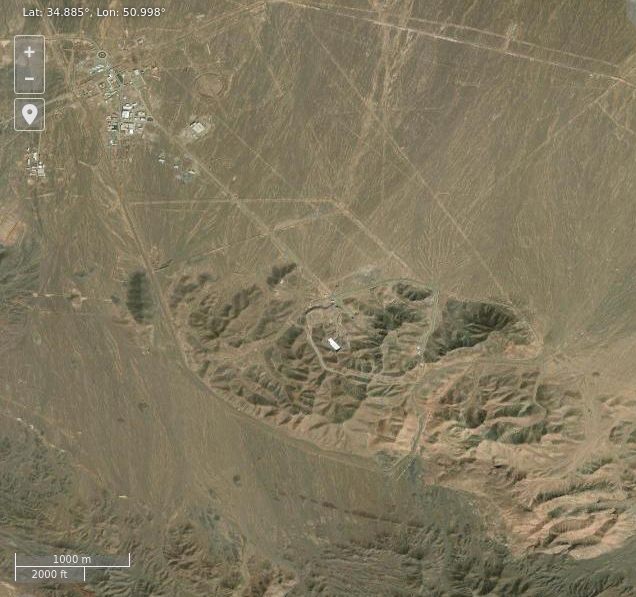
Track four feeds, not one. First, monitor IAEA statements and Board of Governors reports for access, safeguards, stockpile, and enrichment details. Second, monitor government intelligence assessments and congressional research for how public officials are framing the gap between breakout and weaponization. Third, monitor military events at Fordow, Natanz, Isfahan, and related infrastructure through verified imagery and official statements. Fourth, monitor diplomatic signals in US-Iran relations, because negotiation status can change whether nuclear material is used as leverage or treated as a path to breakout.
Each update should answer the same questions: Has the stockpile grown or moved? Has enrichment capacity changed? Has monitoring improved or degraded? Is there new weaponization evidence? Are missile or aircraft delivery signals being linked to a nuclear payload rather than conventional deterrence? If an update answers only one of those questions, do not over-weight it.
| Signal | Why It Matters | Reliable Source Type | False-Alarm Risk |
|---|---|---|---|
| 60 percent stockpile change | Shortens or lengthens breakout assumptions | IAEA report, verified government statement | Medium if numbers are leaked without context |
| Inspector access shift | Changes detection confidence | IAEA Board report or director general statement | Low for access facts, high for motive claims |
| Weaponization activity | Moves assessment toward actual weapon risk | Multi-government intelligence or safeguards finding | High without technical detail |
| Delivery integration | Indicates operationalization beyond material | Verified test data, declassified assessment | High if based only on missile range |
FAQ: Does Iran have nuclear weapons?
Does Iran already have a nuclear bomb?
Public evidence does not show that Iran already has a deployed nuclear bomb. The higher-confidence assessment is that Iran has nuclear material and technical knowledge that could shorten a breakout pathway if leaders chose to weaponize.
How close is Iran to a nuclear weapon?
Iran is closer to nuclear-weapons capability than it was under full JCPOA limits because enrichment levels, stockpile size, and monitoring gaps have all worsened. A weapon still requires more than enriched uranium, including conversion, weapon design, integration, and a delivery plan.
What is Iran's breakout time?
Breakout time usually means the time needed to produce enough weapons-grade uranium for one device, not the time needed to field a usable nuclear weapon. Estimates vary because inspectors, analysts, and governments weigh stockpile location, centrifuge status, and monitoring access differently.
Can Iran make weapons-grade uranium?
Iran has demonstrated the ability to enrich uranium to high levels below weapons-grade and has operated advanced centrifuges. Moving to weapons-grade enrichment would be a political and technical escalation that could be detected more quickly where monitoring access exists.
Does the IAEA know where Iran's uranium is?
The IAEA has reported serious monitoring gaps and loss of continuity of knowledge in several categories since Iran reduced JCPOA-related transparency. That does not prove diversion into a weapon, but it makes confident public accounting harder.
External references: IAEA GOV/2025/24 verification report, Congressional Research Service on Iran and nuclear weapons production, and ODNI 2026 Annual Threat Assessment.