Can bunker busters destroy Fordow is not a yes-or-no slogan question; it is a target-system question that combines fordow depth estimate, rock type, fuze timing, strike sequence, and post-strike access denial. If you are already tracking our nuclear facilities in Iran map, Fordow breakout timeline analysis, and Iran missile attack risk index, this page adds the missing engineering layer: what can realistically be broken, buried, or delayed under wartime constraints.
This guide uses public-source logic from defense studies, open imagery, and known delivery platform constraints to separate online certainty from operational reality. The main conclusion is practical: planners can raise the odds of severe disruption, but certainty claims about total destruction should be treated as low-confidence unless there is repeated strike evidence and independent verification access.
Why does this question matter in real conflict planning?
Most escalation debates collapse into two extremes: either Fordow is untouchable, or one precision strike solves the problem. Both are poor planning models. Decision teams care about functional outcomes: can enrichment be slowed, can throughput be reduced, can access be denied, and for how long. Those are measurable outcomes even when full underground collapse is uncertain.
The search demand is also real. During each major Iran crisis cycle, public queries spike around bunker buster penetration limits, the GBU-57 massive ordnance penetrator, and whether hardened facilities can be neutralized without a prolonged campaign. That interest matters because policy messaging often follows public expectation. If the public expects a binary answer, leaders may overpromise. If planners communicate ranges and confidence levels, expectations stay closer to what operations can deliver.
| Variable | Current Signal | Risk Implication | Tracking Rule |
|---|---|---|---|
| Access shaft collapse | Rising | Higher near-term uncertainty | Confirm over two windows |
| Power disruption | Mixed | Potentially bounded escalation | Reassess after policy updates |
| Main hall damage | Stable | De-escalation path possible | Track persistence vs narrative shift |
How deep is Fordow and what does depth actually change?
Open reporting often cites Fordow at roughly tens of meters under rock, with many references clustering in a broad 70 to 90 meter range for key protected spaces. The exact value is less important than the implication: depth forces an attacker to trade certainty for sequence. Penetrators lose energy as they move through overburden, and complex geology can deflect, absorb, or dissipate shock differently across nearby impact points.
Depth also multiplies uncertainty in battle damage assessment. Even when external crater signatures look severe, the question is whether internal pathways collapsed, whether ventilation survived, and whether operations can be restarted in days versus months. That is why analysts should avoid language like destroyed without independent confirmation from multiple channels, including imagery evolution and facility behavior over time.
| Variable | Current Signal | Risk Implication | Tracking Rule |
|---|---|---|---|
| Depth estimate band | Rising | Higher near-term uncertainty | Confirm over two windows |
| Rock density effects | Mixed | Potentially bounded escalation | Reassess after policy updates |
| Assessment lag | Stable | De-escalation path possible | Track persistence vs narrative shift |
What does the GBU-57 Massive Ordnance Penetrator do well?
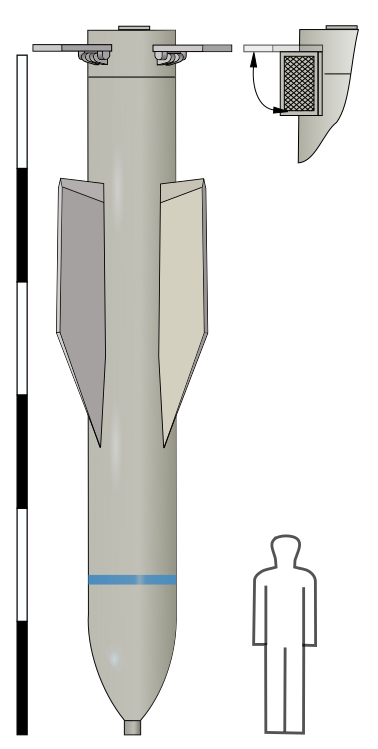
The GBU-57 is designed for hardened, deeply buried targets where conventional munitions are unlikely to produce meaningful underground effects. In planning terms, its value is not only peak penetration; it is its ability to place large kinetic and blast energy below surface layers with delayed fuze options. That makes it relevant for degrading entrances, shafts, and support structures that keep a buried site operational.
However, weapon capability is never independent of delivery profile. Impact angle, release altitude, stand-in survivability, and route deconfliction all influence whether the weapon arrives with the desired geometry. A high-performance penetrator still underperforms if routing and timing force suboptimal approach vectors.
| Variable | Current Signal | Risk Implication | Tracking Rule |
|---|---|---|---|
| Penetration role | Rising | Higher near-term uncertainty | Confirm over two windows |
| Blast coupling | Mixed | Potentially bounded escalation | Reassess after policy updates |
| Fuze timing | Stable | De-escalation path possible | Track persistence vs narrative shift |
Where are bunker buster penetration limits most important?
Bunker buster penetration limits matter most when planners move from concept to campaign. A single weapon test condition does not capture layered concrete, rock heterogeneity, or offset impact points under combat pressure. For Fordow-like targets, the critical limit is usually not one nominal penetration depth number; it is whether repeated impacts can progressively degrade critical pathways faster than defenders can reroute and repair.
In this context, a successful sequence may mean long-term denial of useful throughput rather than cinematic structural collapse. That distinction aligns with risk-based strategy: delaying breakout capability by months can be strategically significant even if some underground chambers remain physically intact.
| Variable | Current Signal | Risk Implication | Tracking Rule |
|---|---|---|---|
| Test-condition bias | Rising | Higher near-term uncertainty | Confirm over two windows |
| Layered target effects | Mixed | Potentially bounded escalation | Reassess after policy updates |
| Repair race | Stable | De-escalation path possible | Track persistence vs narrative shift |
How does Fordow mountain geology affect strike outcomes?
Fordow mountain geology is central because penetrator effects vary sharply across rock type, fracture density, and moisture conditions. Dense, competent rock can transmit shock in ways that damage internal supports, but fractured layers can also absorb energy and reduce deep coupling. This is why military engineers use probabilistic models instead of one deterministic curve.
Geology also affects the order of aim points. If analysts believe a section has pre-existing fracture pathways, strikes may prioritize support systems or access tunnels to compound instability. If geology appears more uniform and strong, planners may rely on repeated penetration at tightly controlled intervals to maximize cumulative effects.
| Variable | Current Signal | Risk Implication | Tracking Rule |
|---|---|---|---|
| Dense rock | Rising | Higher near-term uncertainty | Confirm over two windows |
| Fractured layers | Mixed | Potentially bounded escalation | Reassess after policy updates |
| Mixed strata | Stable | De-escalation path possible | Track persistence vs narrative shift |
Would a single hit be enough or is this a multi-sortie problem?
For a hardened underground complex, this is usually a multi-sortie problem. One impact can create high-value damage, but planners generally assume uncertain internal outcomes until follow-on reconnaissance and secondary strikes confirm degradation. Multiple bunker busters may be used not because the first one fails, but because the objective is to convert uncertain damage into durable denial.
Sequencing can include first-wave penetration, second-wave exploit of weakened zones, and later attacks on logistics nodes that support repair. That campaign logic is expensive and escalatory, which is why policy leaders weigh military feasibility against strategic second-order effects such as regional missile retaliation and shipping disruption.
| Variable | Current Signal | Risk Implication | Tracking Rule |
|---|---|---|---|
| First-wave impact | Rising | Higher near-term uncertainty | Confirm over two windows |
| Second-wave exploitation | Mixed | Potentially bounded escalation | Reassess after policy updates |
| Recovery denial | Stable | De-escalation path possible | Track persistence vs narrative shift |
How important are B-2 routing and air defense suppression?
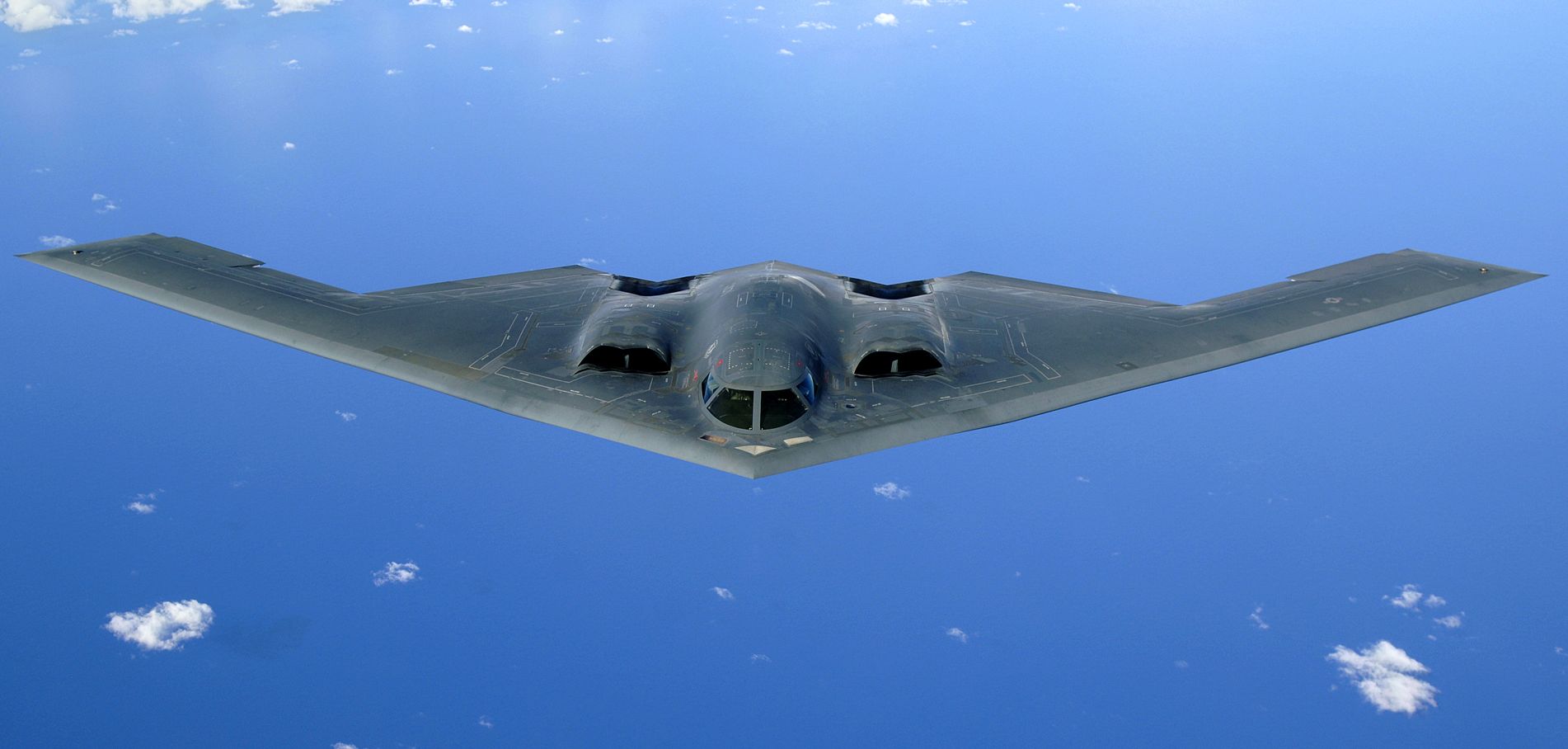
B-2 strike profile considerations are not a side detail. They shape whether the penetrator is delivered with enough flexibility to optimize angle and sequencing. If routing constraints force stand-off behavior or narrow approach windows, planned effects can degrade quickly. This is one reason analysts track not just platform count, but suppression-of-air-defense readiness, tanker support, and electronic warfare posture.
Readers should pair this page with Gulf air defense interceptor capacity and US troops in Middle East to see how regional basing and defensive pressure influence strike feasibility. A weapon can be technically capable yet operationally constrained by theater-level friction.
| Variable | Current Signal | Risk Implication | Tracking Rule |
|---|---|---|---|
| Route flexibility | Rising | Higher near-term uncertainty | Confirm over two windows |
| Suppression depth | Mixed | Potentially bounded escalation | Reassess after policy updates |
| Tanker support | Stable | De-escalation path possible | Track persistence vs narrative shift |
What can be targeted besides main underground halls?
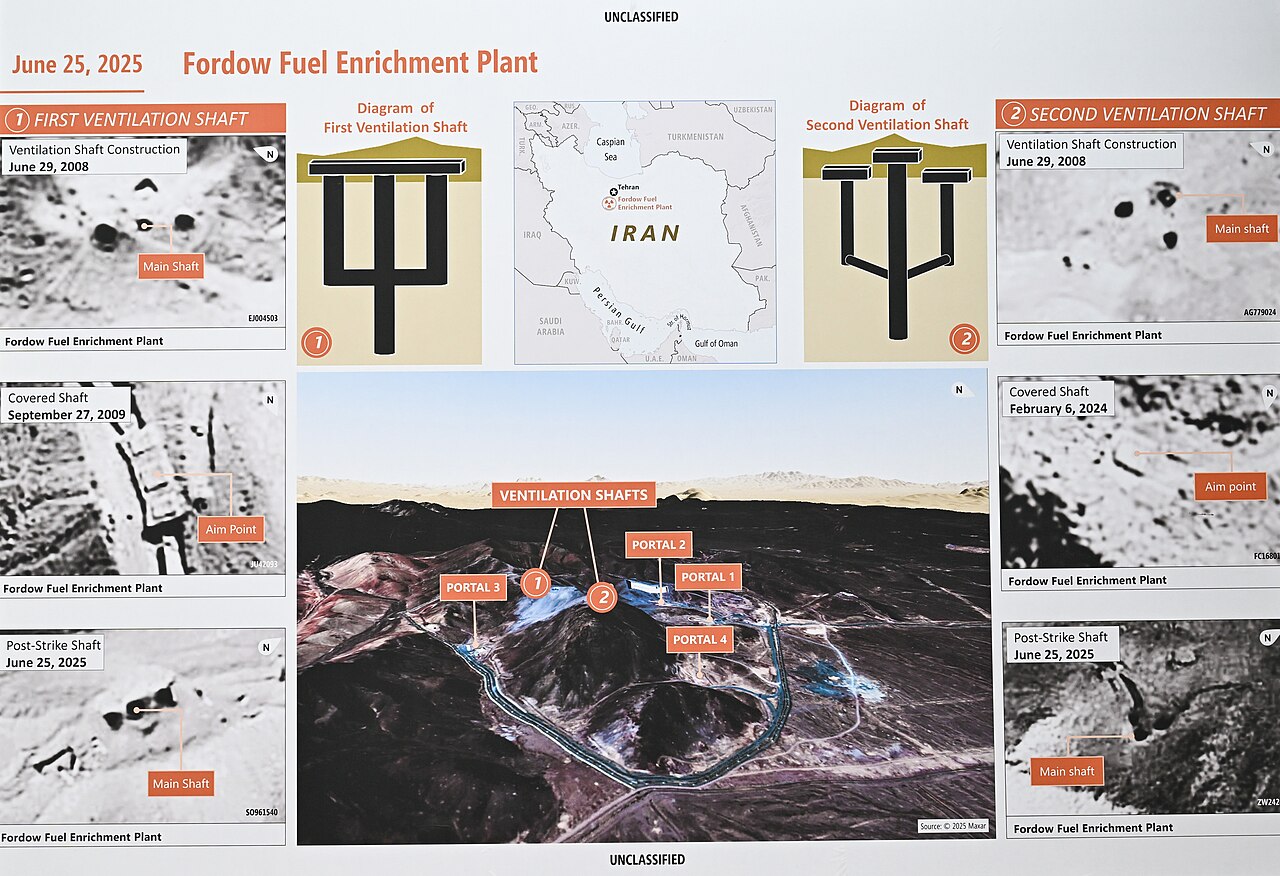
When discussion stays fixed on destroy the hall, it misses the wider target network. Underground facilities depend on ventilation shafts, power distribution, tunnel junctions, surface support buildings, and movement corridors. Damaging these nodes can reduce output even when some subsurface spaces survive structurally.
This is where delayed fuze penetration and follow-on node targeting interact. A campaign can combine deep strikes with infrastructure denial to maximize downtime. From a risk perspective, that can still be strategically effective while requiring fewer assumptions about full subterranean collapse.
| Variable | Current Signal | Risk Implication | Tracking Rule |
|---|---|---|---|
| Ventilation pathways | Rising | Higher near-term uncertainty | Confirm over two windows |
| Power architecture | Mixed | Potentially bounded escalation | Reassess after policy updates |
| Tunnel chokepoints | Stable | De-escalation path possible | Track persistence vs narrative shift |
What does battle damage assessment look like after impact?
Battle damage assessment for Fordow-class targets is iterative. First-pass imagery can identify craters and visible collapse, but internal operational impact is inferred through second-order signals: traffic changes, heat signatures, emergency construction, and timeline interruptions. Good assessment combines classified and open sources; public observers should treat early definitive claims with caution.
A practical monitoring approach is to score outcomes over 72 hours, 7 days, and 30 days. If indicators degrade then quickly recover, the strike was probably disruptive but not decisive. If degradation compounds across all windows, strategic delay may be significant. This method is slower than social media narratives, but materially better for policy and market decisions.
| Variable | Current Signal | Risk Implication | Tracking Rule |
|---|---|---|---|
| 0 to 72 hours | Rising | Higher near-term uncertainty | Confirm over two windows |
| Day 3 to 7 | Mixed | Potentially bounded escalation | Reassess after policy updates |
| Day 8 to 30 | Stable | De-escalation path possible | Track persistence vs narrative shift |
How should readers interpret claims that Fordow is undestroyable?
Undestroyable is usually a rhetorical shortcut, not an engineering conclusion. The better framing is outcome spectrum: partial disruption, major delay, or near-total denial. Fordow hardening raises the difficulty ceiling, but it does not remove vulnerability in all subsystems. Conversely, calling it easy is equally misleading because deep hard targets impose real uncertainty even with advanced penetrators.
For readers, the right question is what confidence level supports each claimed outcome, and over what timeline. If evidence is thin and timeline short, treat absolute claims as narrative positioning. If evidence is multi-source and persistent across weeks, confidence should rise.
| Variable | Current Signal | Risk Implication | Tracking Rule |
|---|---|---|---|
| Partial disruption | Rising | Higher near-term uncertainty | Confirm over two windows |
| Major delay | Mixed | Potentially bounded escalation | Reassess after policy updates |
| Near-total denial | Stable | De-escalation path possible | Track persistence vs narrative shift |
FAQ: Can Bunker Busters Destroy Fordow in 2026?
How deep is Fordow and why does depth matter?
Public-source estimates usually place key Fordow halls under tens of meters of rock, often cited near 70 to 90 meters. That depth forces planners to model geology, impact angle, and repeated penetration rather than assuming a single hit guarantees collapse.
Can the GBU-57 destroy Fordow in one strike?
A single GBU-57 can damage access points or overburden, but full functional kill is not guaranteed in one pass against a hardened underground complex. Most realistic models treat the target as a multi-sortie problem with uncertain battle damage assessment.
Would multiple bunker busters be needed?
Yes, most credible strike frameworks assume multiple weapons and sequencing. Follow-on hits are usually designed to exploit fractures, collapse shafts, and deny recovery teams access to critical chambers.
What happens after a strike on Fordow?
The immediate phase is battle damage assessment under uncertainty, not instant strategic certainty. Regional retaliation risk, air-defense response, and verification access often determine whether the operation buys time or accelerates escalation.
External references: CSIS, IISS, Reuters Middle East.