Can Iran missiles reach US is usually asked as a yes-or-no question, but operational planning treats it as a layered probability problem with target category, launch architecture, and defense burden all in play. A realistic answer starts by splitting the question into three bands: U.S. facilities in the Gulf and surrounding theater, U.S. naval assets that move across wider maritime corridors, and the continental United States. Those bands have different distance math, warning clocks, and interception assumptions, so a headline answer that ignores target class often misleads both public readers and market participants.
That distinction matters because open-source discussions of iran missile capabilities often blend advertisement range, test history, and wartime employment as if they are interchangeable. They are not. Demonstrated reach in controlled testing does not automatically equal reliable wartime mission effectiveness against defended targets. Conversely, a system with modest maximum range can still generate high strategic pressure if it can be launched in volume against dense regional infrastructure. In current escalation modeling, launch simultaneity and persistence matter as much as absolute distance.
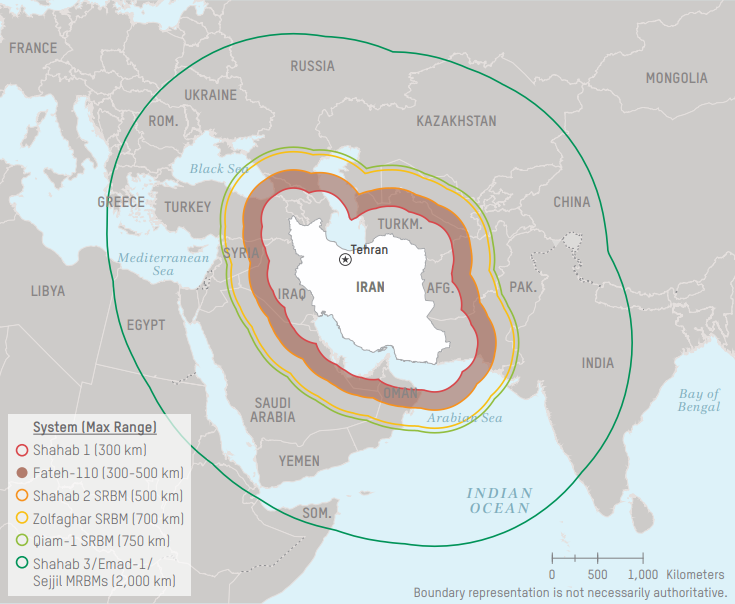
Can Iran Strike the U.S. Mainland Directly?
The mainland question receives disproportionate attention because it is emotionally legible and politically explosive, but most near-term planning models still assign higher confidence to regional-target scenarios than to routine direct continental strikes. That does not mean the homeland dimension is irrelevant. It means analysts should distinguish between "theoretical reach pathways" and "repeatable wartime strike packages." Without that distinction, media cycles swing between overconfidence and panic, neither of which helps decision-makers.
In practical terms, U.S. homeland-focused scenarios require additional assumptions about delivery method, staging, and detection evasion that differ from standard regional ballistic employment. Regional targets, by contrast, sit within known operational geometry where iran attack on u.s. discussions are tied to existing basing patterns and shorter flight windows. The shortest useful summary is this: immediate confidence is highest for regional pressure, while direct homeland claims need tighter evidence thresholds before they should shape policy or public guidance.
| Target Band | Relative Feasibility | Warning Time Profile | Main Constraint |
|---|---|---|---|
| Regional U.S. bases | High in crisis scenarios | Minutes to short tens of minutes | Interceptor capacity under volume stress |
| Naval assets in theater | Variable by location and posture | Compressed and maneuver dependent | Targeting persistence and ISR continuity |
| Continental U.S. | Lower confidence in routine direct model | Longer but assumption-sensitive | Delivery architecture and detectability |
Which Missile Systems Matter Most in a U.S.-Iran Conflict?
For fast-escalation risk, the center of gravity remains systems that can saturate regional defenses rather than systems optimized for symbolic maximum-distance claims. Medium-range ballistic inventory, cruise options, and launch mobility together shape pressure potential on hubs that keep U.S. operations running. That is why many commanders focus less on one marquee system and more on inventory depth, reload speed, and launcher survivability after first-wave exchange.
This is also where iranian ballistic missile ranges charts can be misunderstood. A clean concentric map circle implies certainty; real combat introduces friction. Launchers can be found and hit, comms can be interrupted, guidance performance can vary, and defensive layers can force inefficient missile expenditure. Still, even imperfect systems can impose high operational cost when fired in coordinated salvos. In other words, the decisive question is often not "can one missile get through" but "how much defensive inventory must be committed, how quickly, and for how long."

How Vulnerable Are U.S. Bases in the Gulf Compared With the Homeland?
The exposure gap is large. Gulf infrastructure sits in shorter-range windows with compressed warning timelines and dense target geography, which can strain command-and-control even when defensive systems perform as designed. That does not make every site equally vulnerable, but it does mean regional defense is an endurance contest under uncertainty. A base can survive the first wave and still face operational degradation through repeated alerts, sortie disruption, or logistics bottlenecks.
This is why our Al Udeid Air Base in Qatar profile is designed as a companion page. The abstract question "can iran missiles reach us" becomes concrete when mapped onto runways, fuel handling, maintenance cycles, and command hubs. For readers tracking risk cadence rather than static capability claims, that basing perspective is essential. A missile threat is not measured only by crater size; it is measured by how much mission tempo drops and how long restoration takes.

What Does Missile Defense Change, and What Does It Not Change?
Missile defense changes outcome probability, not conflict arithmetic itself. Layered defenses can prevent damage, preserve command continuity, and buy decision time. They cannot guarantee zero leakage under high-volume attack, and planners do not treat them as an impenetrable shield. The key operational variable is inventory management over repeated windows: interceptors fired tonight are unavailable tomorrow unless resupply and repositioning keep pace.
This is where open-source reporting on us missile defense can become misleading if it highlights platform count but ignores reload and distribution constraints. A force can look robust on paper and still face local stress if threat axes shift unexpectedly. The practical reading of defense posture is therefore temporal: who can maintain effective coverage over consecutive cycles while preserving enough reserve for surprise vectors? That question determines deterrence durability more than single-intercept success stories.
Launch Pathways, Warning Time, and Decision Compression
Warning-time compression is a policy issue as much as a technical one. With short regional trajectories, leaders may have minutes to confirm tracks, assess confidence, and authorize layered responses. Decision quality depends on sensor fusion and prebuilt playbooks. In highly compressed windows, clear doctrine and rehearsal matter more than rhetoric. That is why military planners emphasize probability stacks and rehearsed escalation ladders instead of one-off "can or cannot" statements.
The same logic applies to public communication. A vague warning can create panic and market overreaction; a false all-clear can create complacency. Better communication anchors alerts to confidence intervals and scenario branches. For users who also follow our nuclear facilities in Iran map guide and US vs Iran strategic comparison, the link is direct: missile timelines, site significance, and strategic objectives all need to align before any forecast is credible.

Most Useful Way to Read the Question in 2026
The highest-value framing is: "Which U.S. targets are realistically exposed in the next strike window, at what confidence level, and with what likely warning time?" That framing avoids the false certainty of binary discourse and keeps policy tied to observed capability, not social-media amplification. It also aligns with how military and intelligence organizations actually build risk products: layered by geography, timeline, and confidence.
For the public, that means a disciplined reading of claims. If a source cites maximum range, ask about launch method and repeatability. If a source cites interception strength, ask about volume and endurance. If a source cites immediate danger, ask which target band is under discussion. Those three filters remove most low-quality takes from the information flow and keep attention on operationally relevant evidence.
Analyst Workflow: Turning "Can Iran Missiles Reach US" Into a Defensible Daily Brief
For intelligence desks, the keyword can iran missiles reach us should trigger a recurring workflow rather than a one-off write-up. Step one is collection discipline: inventory the day's claims by source type (official statement, technical think tank, commercial imagery, local eyewitness material, platform chatter). Step two is normalization: convert claims into comparable fields such as target category, stated range, stated confidence, and implied timeline. Step three is contradiction mapping: flag where two high-visibility sources conflict on the same technical point, especially around launch readiness and warning time.
Step four is relevance filtering. Not every missile claim changes short-window risk. A historical test citation may be technically correct and operationally irrelevant to today's posture. A low-detail alert may be noisy but still relevant if it aligns with movement indicators near known launch-support infrastructure. Step five is output segmentation: produce one version for policy leadership (confidence and implications), one for operational teams (timing and likely axis), and one for public release (clear uncertainty labeling). That segmentation prevents the common mistake of pushing tactical ambiguity into public messaging where it can trigger volatility without adding clarity.
Most importantly, analysts should maintain a "confidence ledger" over time. If a source repeatedly overstates imminent launches, its weight should decline. If another source is conservative but accurate, its weight should rise. This avoids narrative capture in high-noise windows. A range debate with no confidence governance is just a louder rumor loop.
What Usually Gets Misread in Viral Missile Threads
Viral threads often treat max range as mission guarantee and treat map circles as if they imply deterministic outcomes. They rarely account for launcher attrition, pre-launch detection risk, decoys, weather effects, command friction, or the logistics cost of repeated volleys. The result is a public discourse that alternates between "total safety" and "immediate catastrophe" with very little middle ground. Operational planning does the opposite: it works in probability bands and tracks how those bands widen or narrow as new information arrives.
Another recurring error is flattening target categories. A U.S. base in the Gulf, a carrier group at sea, and a city in the continental U.S. are not analytically interchangeable targets. They have different approach vectors, different sensor coverage, different defense architecture, and different political consequence thresholds. High-quality reporting should state the target class in every substantive claim. If the class is omitted, readers should treat the statement as incomplete regardless of confidence in the speaker.
Finally, many threads ignore endurance math. A side can launch a meaningful first wave and still fail to sustain pressure if reload, protection, and command continuity do not hold. The reverse is also true: even imperfect launch performance can create strategic strain if repeated frequently enough. This is why endurance and tempo matter more than any single range headline.
Practical Decision Grid for Daily Risk Updates
For editors and risk desks, a compact decision grid improves consistency. If new evidence increases confidence in launcher movement but not in imminent launch timing, classify the update as posture change, not attack warning. If evidence increases confidence in both movement and compressed timeline indicators, escalate alert status and attach a short confidence rationale. If evidence decreases confidence due to source contradiction, downgrade certainty explicitly instead of leaving yesterday's framing in place. This discipline keeps audience trust high during noisy cycles.
The same grid helps avoid over-alerting. Repeated red alerts that do not resolve into credible high-risk windows reduce future compliance and can create strategic complacency. A better method is tiered communication: baseline watch, elevated watch, and immediate action advisory. Each tier should map to specific indicators and expected update cadence. In other words, communication should mirror operational uncertainty rather than emotional intensity.
Readers can apply a simplified version personally: ask what changed, how confident the source is, and what action follows from the update. If none of those are clear, the information may be signal-poor. In the context of can iran missiles reach us, this filter prevents confusion between structural capability and immediate launch risk.
FAQ: Can Iran Missiles Reach US
Can Iran strike the U.S. mainland directly?
Most near-term analyses still place higher confidence on regional U.S. target exposure than direct routine mainland strike feasibility. Mainland scenarios depend on additional assumptions and should be treated with stricter evidence thresholds.
Which missile systems matter most in a U.S.-Iran conflict?
Systems that can sustain regional pressure at volume matter most in early escalation. Launcher survivability, inventory depth, and firing tempo are often more decisive than headline range claims.
How vulnerable are U.S. bases in the Gulf?
Regional bases generally sit in shorter warning windows and can face cumulative operational stress under repeated alerts or salvos. Defense layers reduce risk but do not eliminate saturation pressure.
What warning time exists in a launch scenario?
For regional tracks, warning can compress to minutes, so decision quality depends on integrated sensors and preplanned response ladders. Volume and simultaneity are central to outcome risk.
External references: CSIS Missile Defense Project, U.S. Missile Defense Agency, Arms Control Association.